
The complete guide
A Practical Guide to Choosing Black Faux Leather Fabric
Start with the project, not just the finish
A worn chair seat or an unfinished bag design can leave you looking for a material that brings the whole project together. Black faux leather offers a leather-look finish without using genuine hide. The key is choosing a piece that fits both your pattern and the way the finished item will be used.
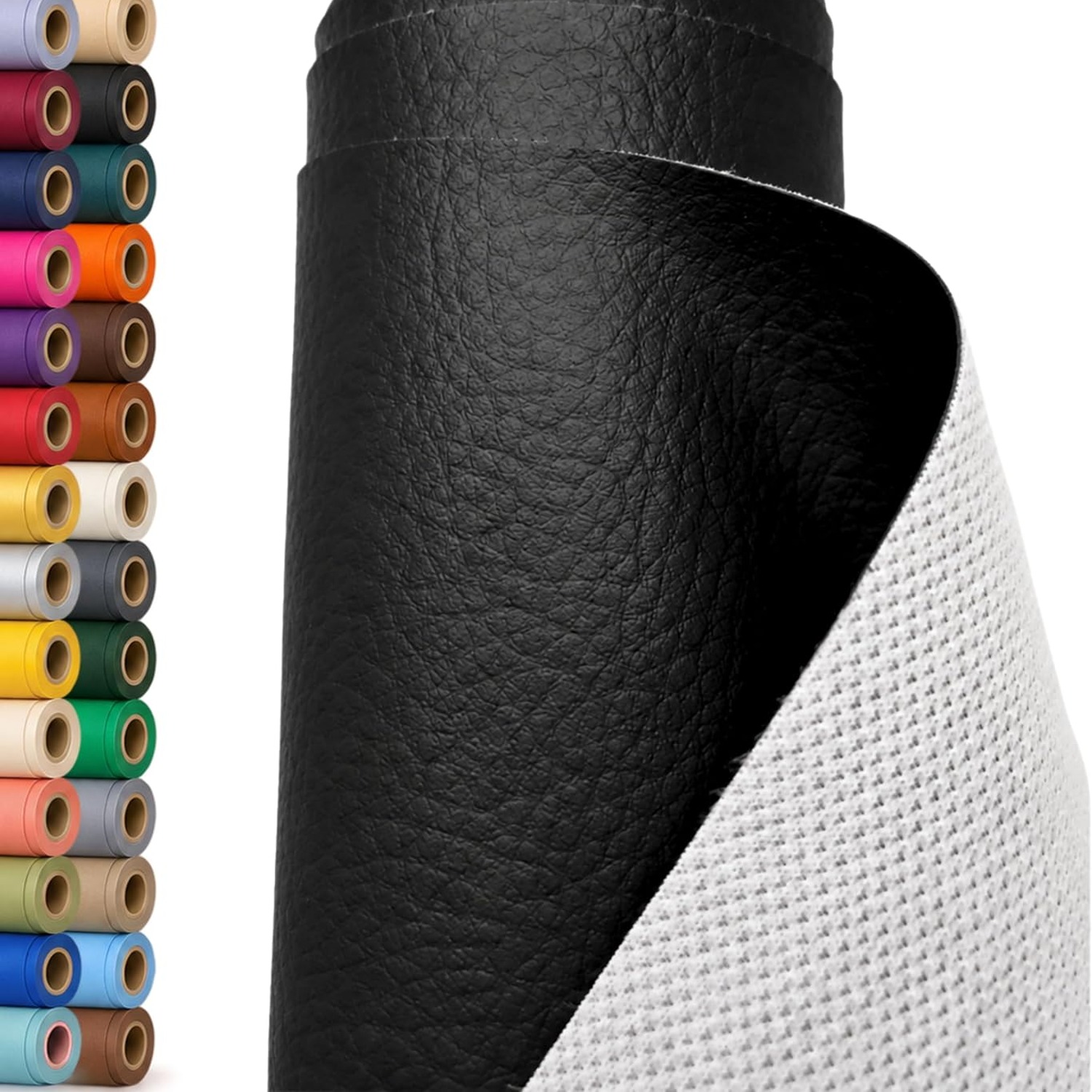
This fabric has a grained surface and a solid black colour. It comes as one piece, 100 cm long and 140 cm wide. That makes the buying decision fairly clear. You need to know whether your panels fit inside that rectangle, and whether the stated properties meet your needs.
A good-looking surface is only part of the choice. Thickness, joining methods and care matter too. For furniture, you may also need performance information that the maker's description does not provide.
Understand what you are buying
This is a fixed-size piece of black leatherette fabric, not a custom-length order. One pack contains one piece with a listed area of 1.4 square metres. Do not plan around receiving a longer continuous length if you order more than one pack.
The fabric is approximately 0.8 mm thick and weighs 600 g. These figures help you compare it with other materials, but they do not tell you everything about how it will behave. Softness, stretch and stiffness are not specified.
The material and fabric type are both listed as polyester. A separate weave entry reads Plain/Cotton. That entry is not a clear statement of cotton content, and the maker gives no full fibre breakdown. If exact composition is important, seek clarification before buying rather than guessing from the product name.
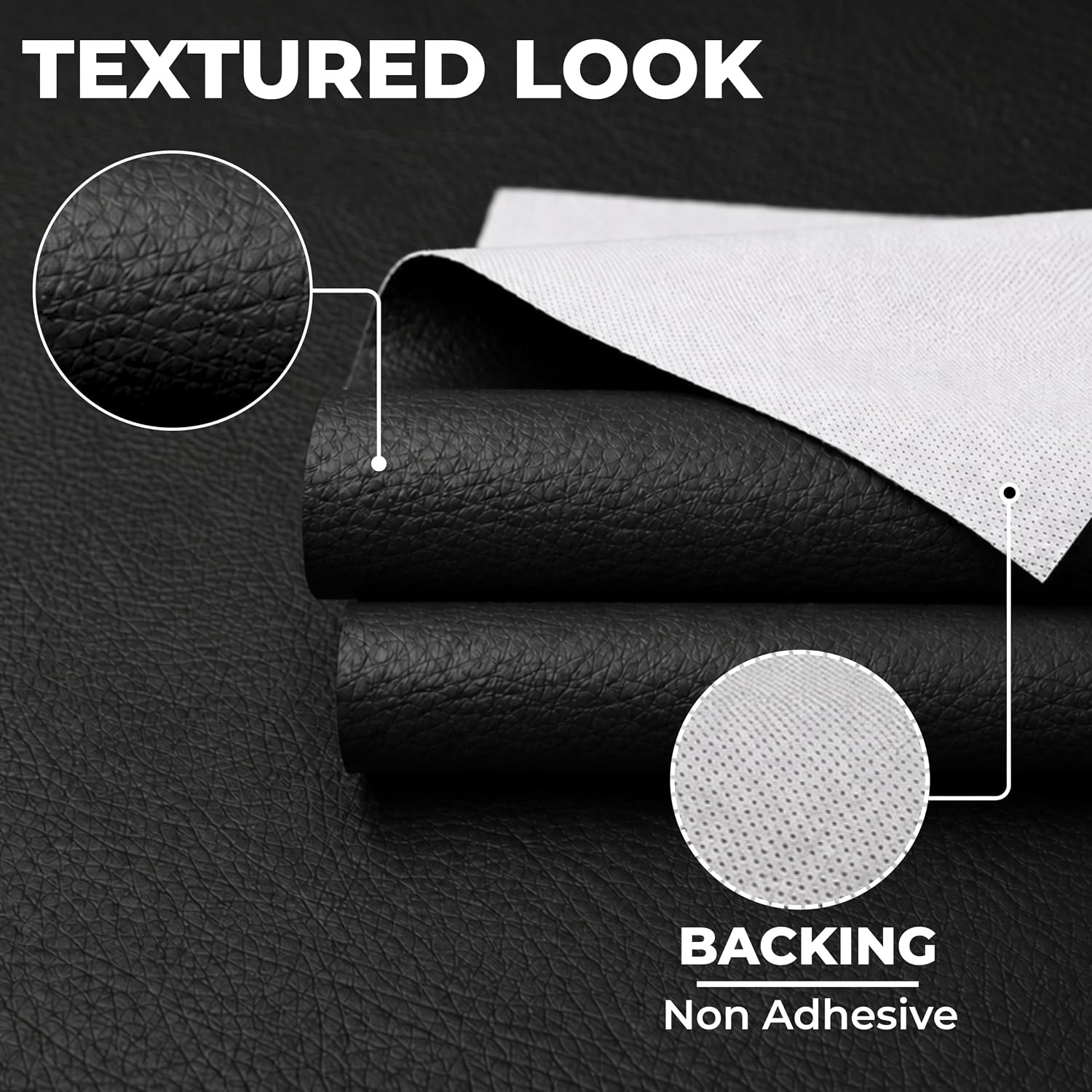
What the grained surface brings to a design
Grained leatherette fabric adds surface detail while keeping the colour simple. That can work for a furniture panel or bag where you want the shape and stitching to remain the main focus.
Think about the other finishes around it. A black covering may look quite different next to pale wood than beside dark metal. Look at the product images in the room where the finished item will sit, while remembering that a screen cannot confirm the exact colour or feel.
The grain also deserves attention when you lay out pieces. Before cutting, turn each pattern section in the direction you intend to use it. Check that the visible panels look consistent together. This takes a little time, but it is easier than trying to change a cut panel later.
Measure the whole job
The most useful first step is a paper cutting plan. Mark out a rectangle measuring 100 cm by 140 cm, then place your pattern pieces within it. Use their full cutting sizes, not just the dimensions you expect to see on the finished item.
For upholstery, allow for the fabric that wraps around an edge and attaches underneath. For a sewn project, include seam allowances, hems and folded sections. These hidden areas still use material.
Do not rely on the total area alone. Two panels may add up to less than 1.4 square metres yet still fail to fit within the available width and length. Shape matters as much as area.
If you are replacing an existing cover, it can help to study how that cover was made. Note where it joins, where it folds and how it is fixed. Do this before deciding that one piece will be enough.
Choosing it for upholstery
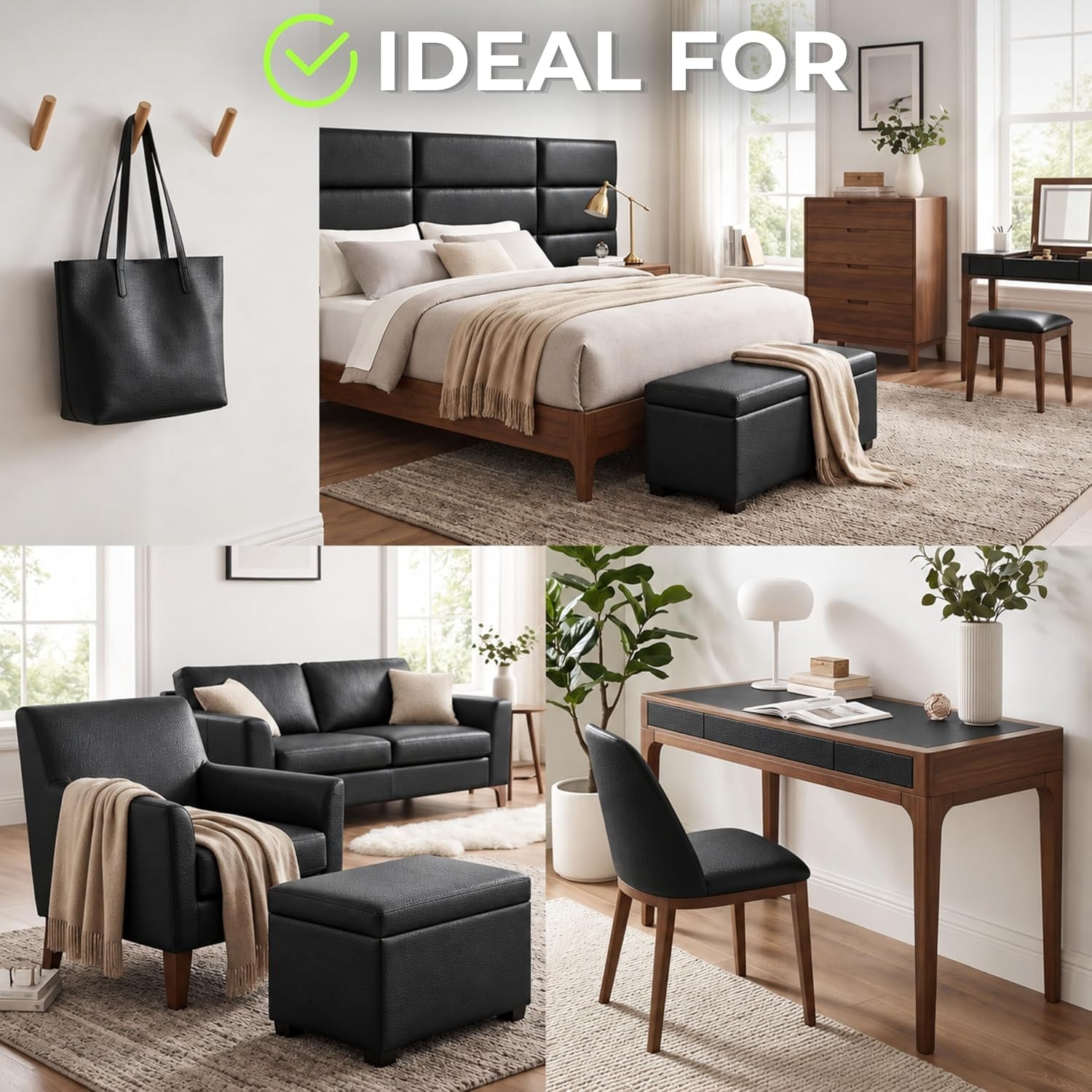
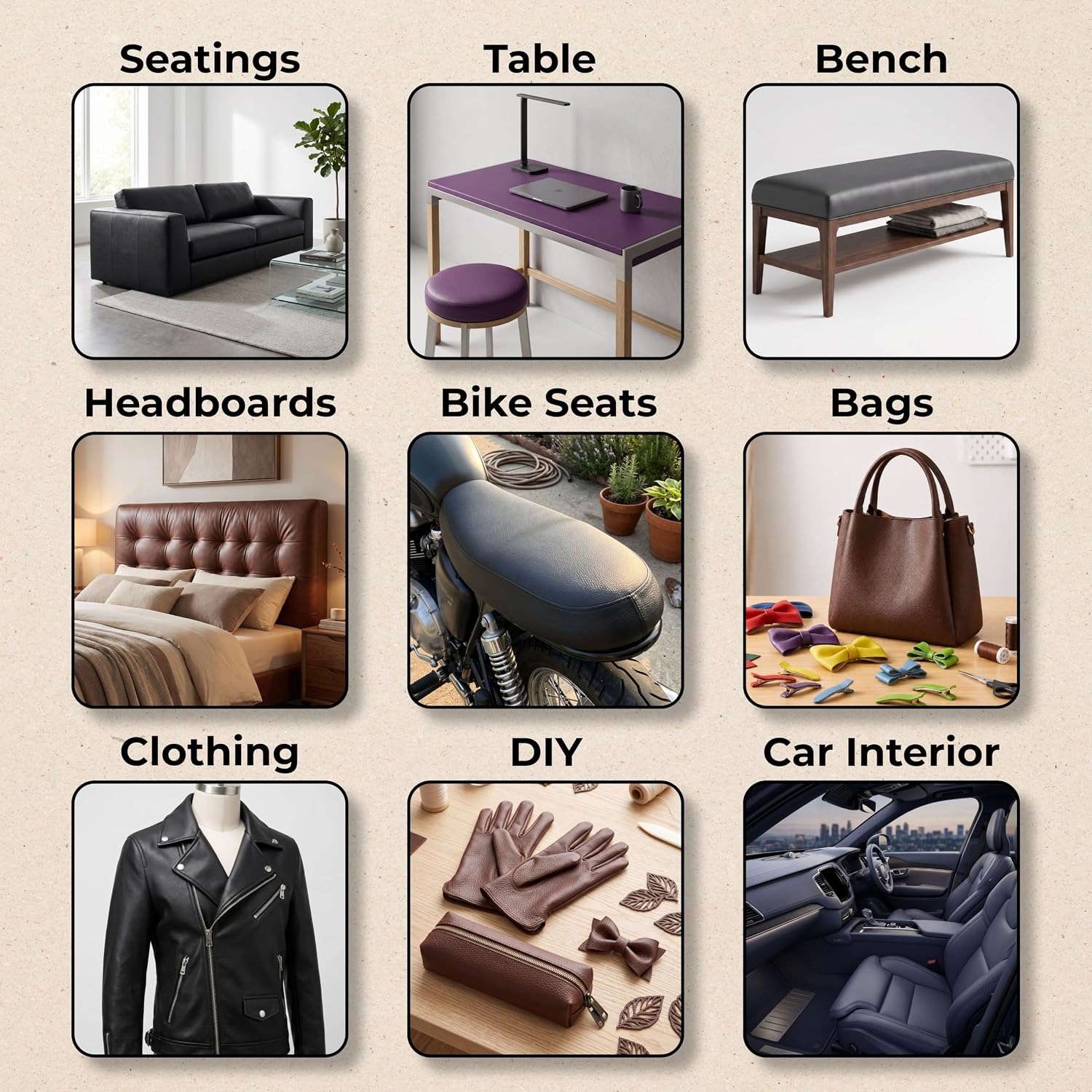
Upholstery is one of the listed uses, so this fabric is worth considering for suitable furniture projects. A small seat panel is a different task from covering a whole armchair, though. Each needs its own measurements and construction plan.
When comparing upholstery fabric for chairs, ask what the chair must withstand. Occasional use at home is not the same as constant use in a shared space. The maker lists durability as a feature, but gives no abrasion score or expected lifespan.
It also provides no fire rating. Some furniture projects and settings have specific requirements, so check those before ordering. The term vinyl upholstery fabric does not, by itself, prove that a material meets a required standard.
If an upholsterer will do the work, share the product details with them first. They can assess the listed size and thickness against the job and tell you what further information they need.
Planning bags and smaller craft projects
Bags, clothing and crafts are also suggested uses. For these projects, think about the finished shape before choosing how to join the material.
A flat pouch panel may need fewer folds than a shaped bag corner. Several overlapping layers can change how a seam passes through a machine. The approximate 0.8 mm thickness is a useful starting point, but a test seam will tell you more about your setup.
For faux leather for bags, consider the handles and closure as well as the main body. A successful panel seam does not prove that a handle attachment will carry your intended load.
Smaller leathercloth fabric projects can be a sensible way to use the material left over. Plan those after fitting the main panels, rather than sacrificing an important section for a small accessory too early.
Sewing and gluing need a trial run
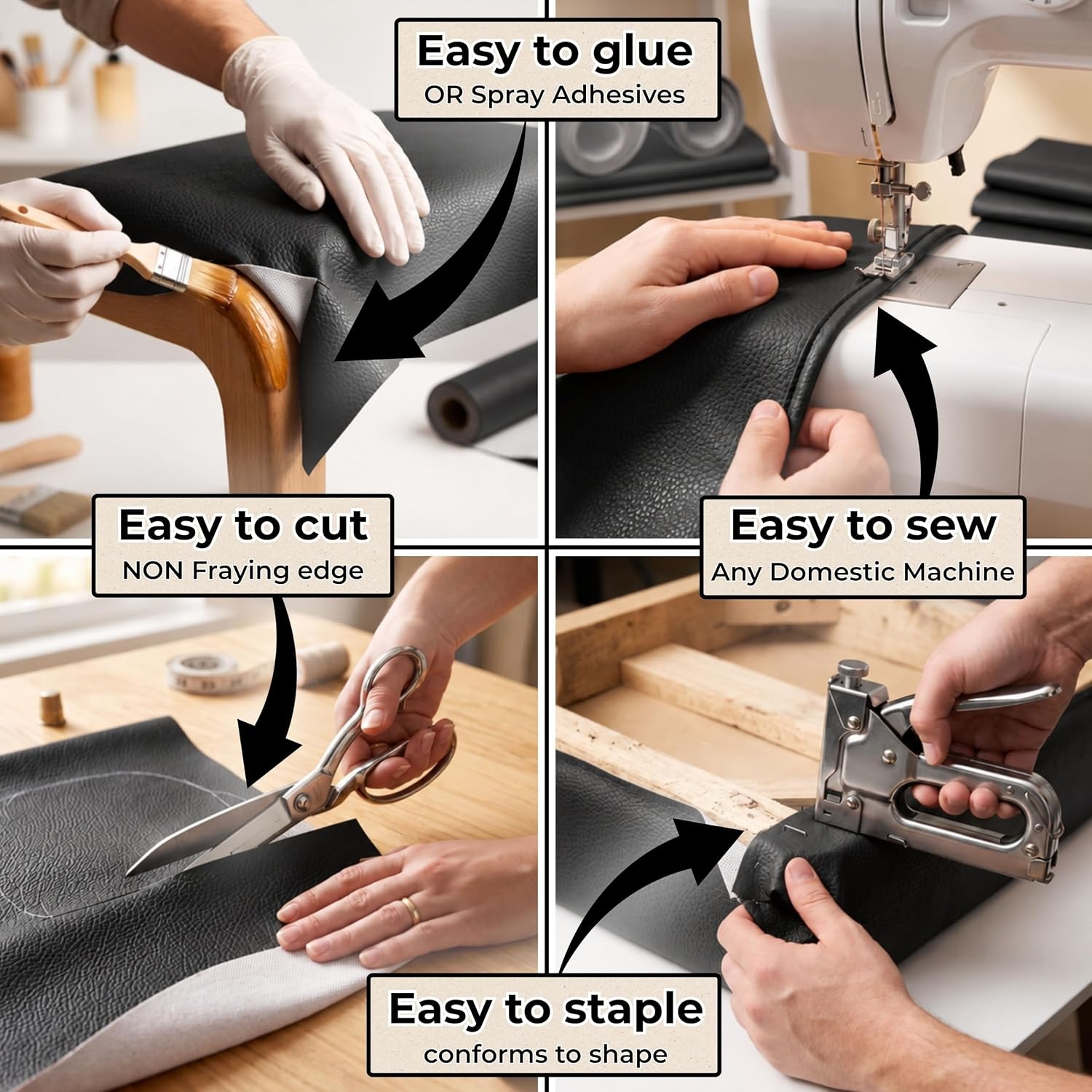
The product information says the fabric can be cut, sewn or glued. It does not name a needle, thread, stitch length or adhesive.
Start with a spare section. If sewing, test the same number of layers you expect in the finished item. Check the stitching on both sides and gently assess the join before moving on.
If gluing, follow the adhesive maker's directions and confirm that it is suitable for the surfaces involved. Try it in a small area first and allow the stated setting time. Look for changes to the finish as well as the strength of the bond.
Avoid assuming that one method will suit every part of a design. A decorative panel and a stressed join may need different approaches. If you are new to working with faux leather for sewing, a simple pattern gives you fewer difficult corners to manage.
Be clear about water and outdoor use
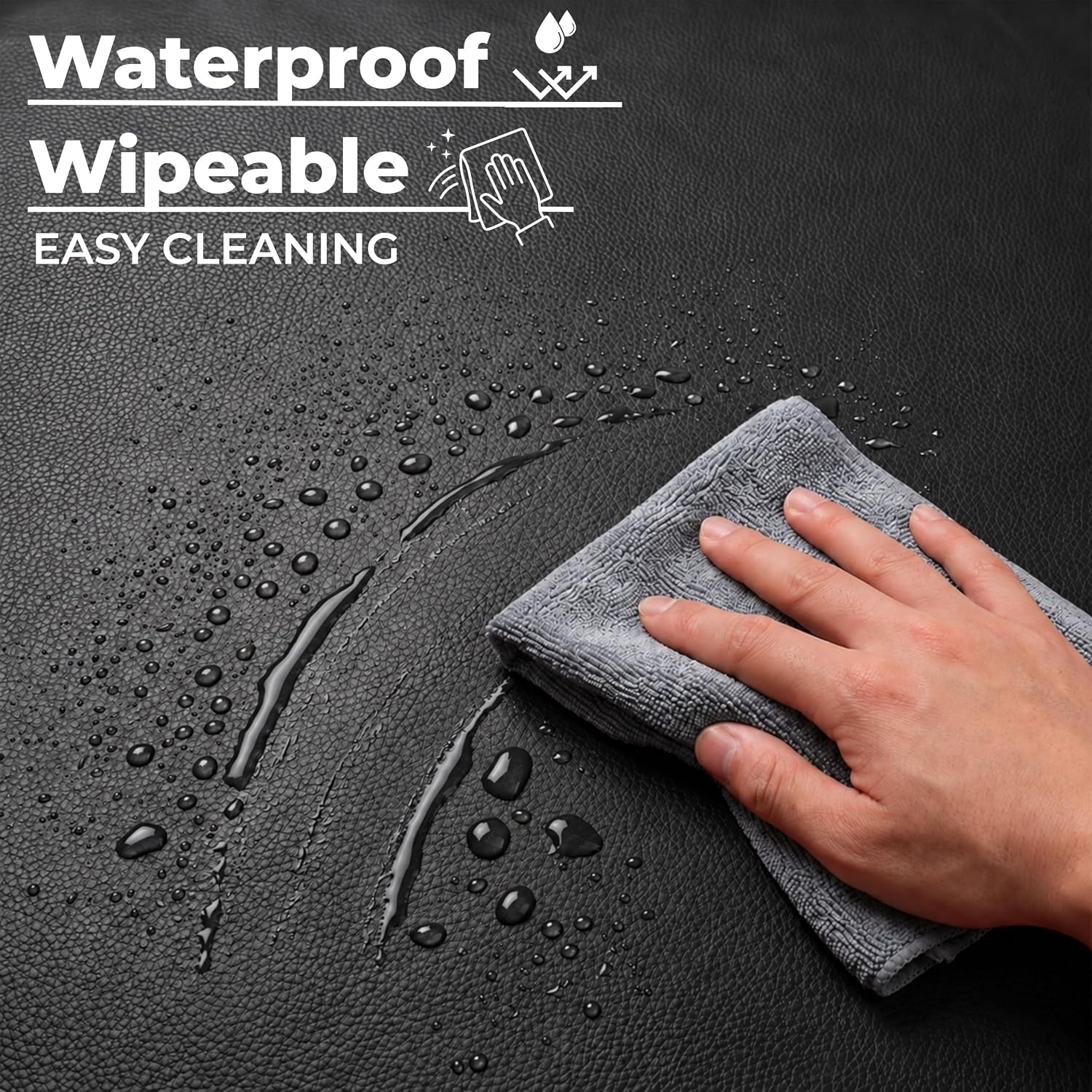
The maker describes the surface as waterproof. That is not the same as a tested promise that a finished bag or seat will keep water out.
Stitch holes, cut edges and joins can change how an item deals with moisture. No water-resistance test result is included here, so do not base a demanding wet-use project on the surface description alone.
Outdoor performance is also not specified. There is no stated UV resistance or weathering result. If you need a furniture covering fabric for a garden seat, confirm those properties before you buy.
The same care applies to heat. The maker does not give an ironing temperature or heat tolerance. Avoid guessing about treatments intended to flatten or shape the fabric.
Keep care simple
The stated cleaning method is straightforward. Wipe with a damp or dry cloth, then dry promptly.
That makes this wipe-clean upholstery fabric an option for projects where simple surface care is useful. It does not establish resistance to every stain, cleaner or spill.
Begin gently and test any cleaning method on a hidden area. There is no need to start with a strong cleaning product when the stated instruction calls for a cloth.
Machine washing and tumble drying are not included in the care directions. Follow the supplied method rather than treating the piece like a washable woven clothing fabric. Also consider any care needs introduced by the glue, lining or other materials in your finished project.
Inspect before making the first cut
When the piece arrives, check the colour, finish and measurements against your plan. Inspect it before you wash, cut or use it.
Lay out the full pattern once more. Make sure you have included every panel and that the pieces face the direction you want. This is a useful final pause, even if you have already drawn a careful plan.
The stated UK return period is 14 days from delivery for fabric that is unwashed, uncut, unused and in its original packaging. The customer pays return postage. Faulty or wrongly described goods are put right free of charge.
Delivery timing is not specified by the maker. Check the information at checkout, particularly if the fabric is for a gift or a project with a fixed deadline.
The short version
Choose this black faux leather for a project that fits a single 100 cm by 140 cm piece and suits the listed polyester material and approximate 0.8 mm thickness. Its grained finish is intended for upholstery, bags, clothing and crafts, with damp- or dry-cloth care.
Measure first, test your joining method and ask about any performance requirement that is not stated. A clear plan will help you decide whether this piece belongs in your project before the first cut.