
The complete guide
A Buyer's Guide to Assorted Colour Felt Sheets
When a project needs several colours, not a roll of fabric
Small craft projects often need a little of one colour and a little of another. A puppet might need a body, eyes and clothing details. A handmade card may need only a few leaves or letters. Buying large lengths for those small pieces can leave you with more fabric than your project needs.
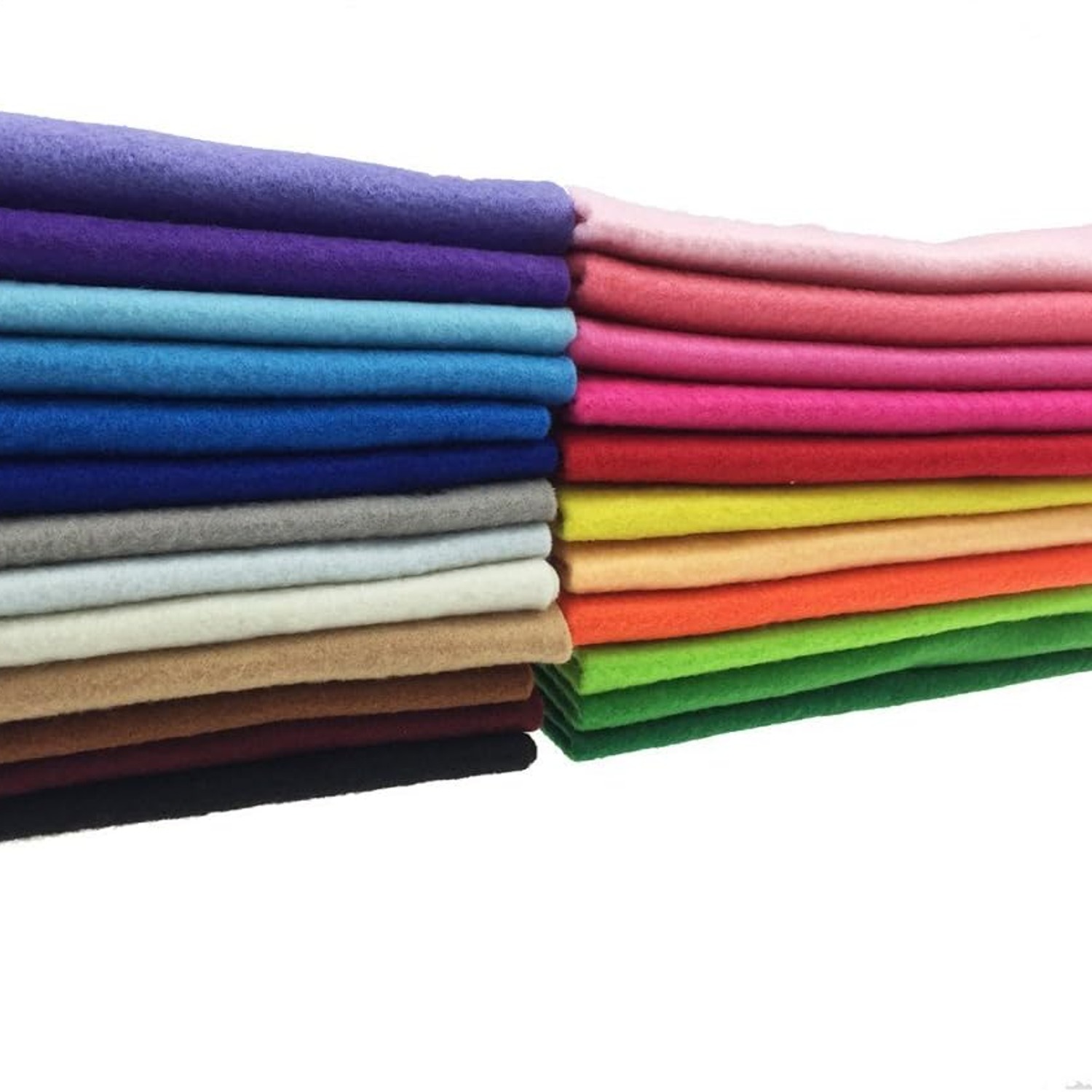
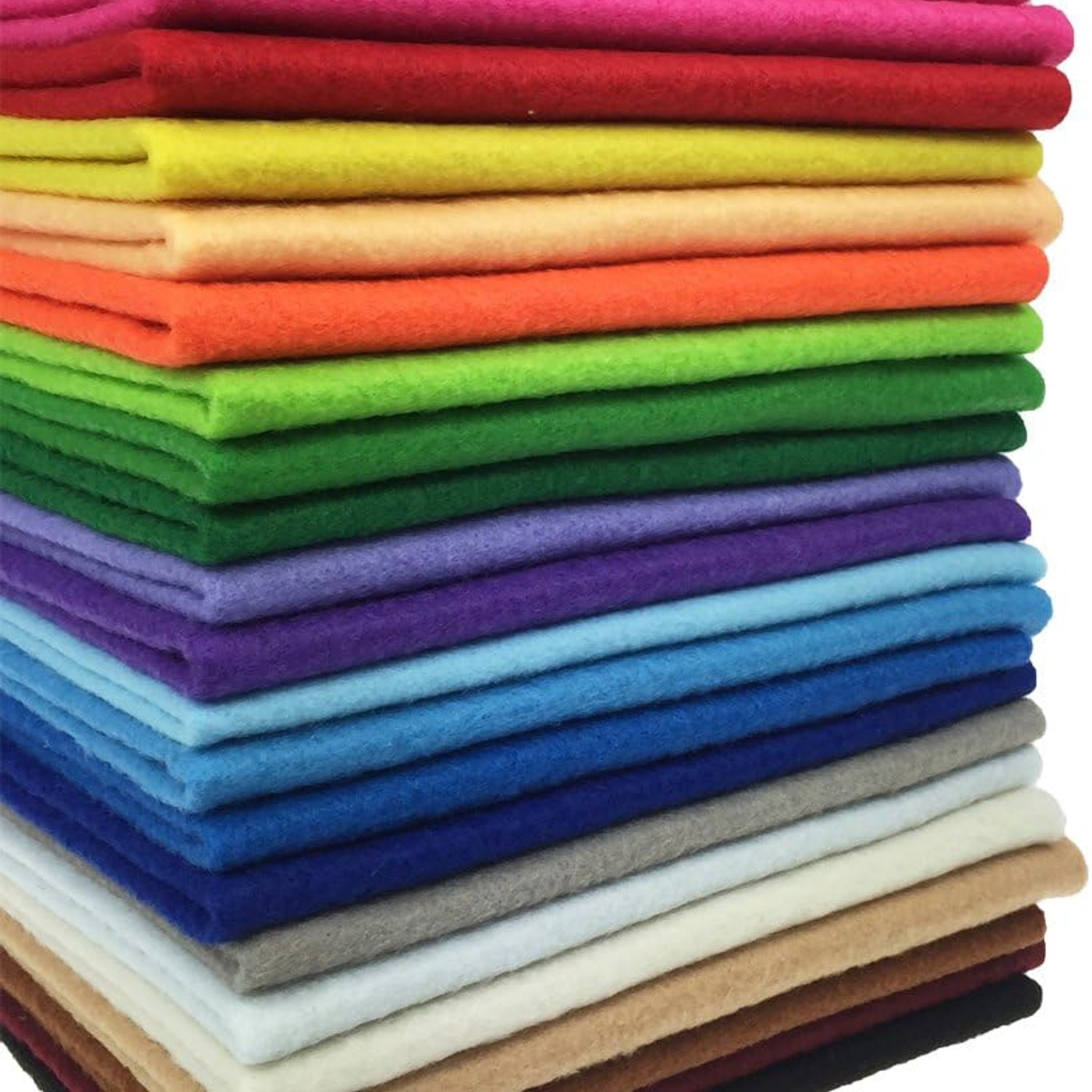
This assorted colour felt pack offers a different starting point. You can lay out the sheets, compare colours and plan your design before making the first cut.
The main question is whether those ready-sized squares suit your idea. They give you a choice of colours, but they are not a substitute for a continuous length when you need a large, unbroken piece.
What you get in the pack
Each sheet is approximately 1.4 mm thick. The felt has a solid pattern and a nonwoven construction, with an item weight listed as 200 g for the product.
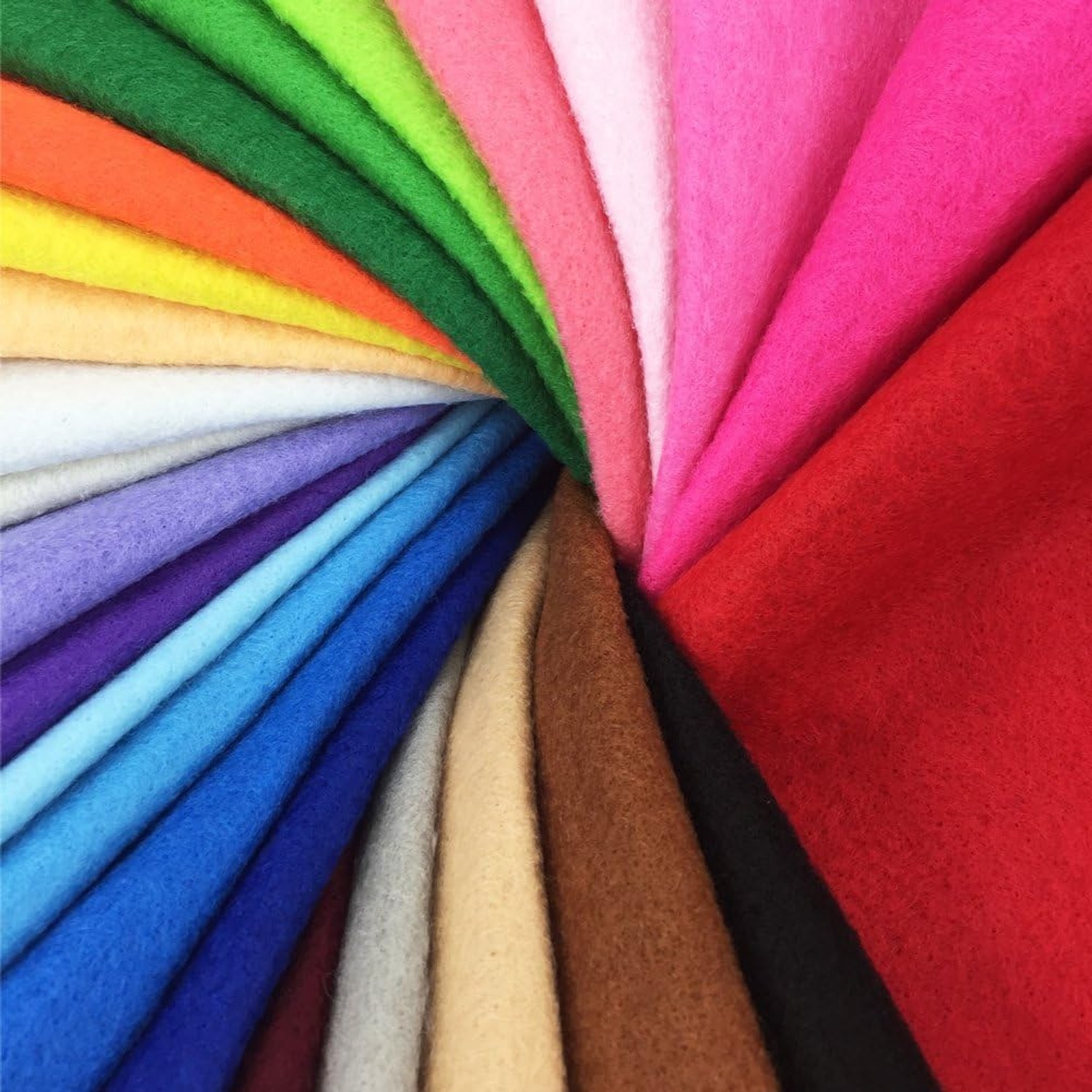
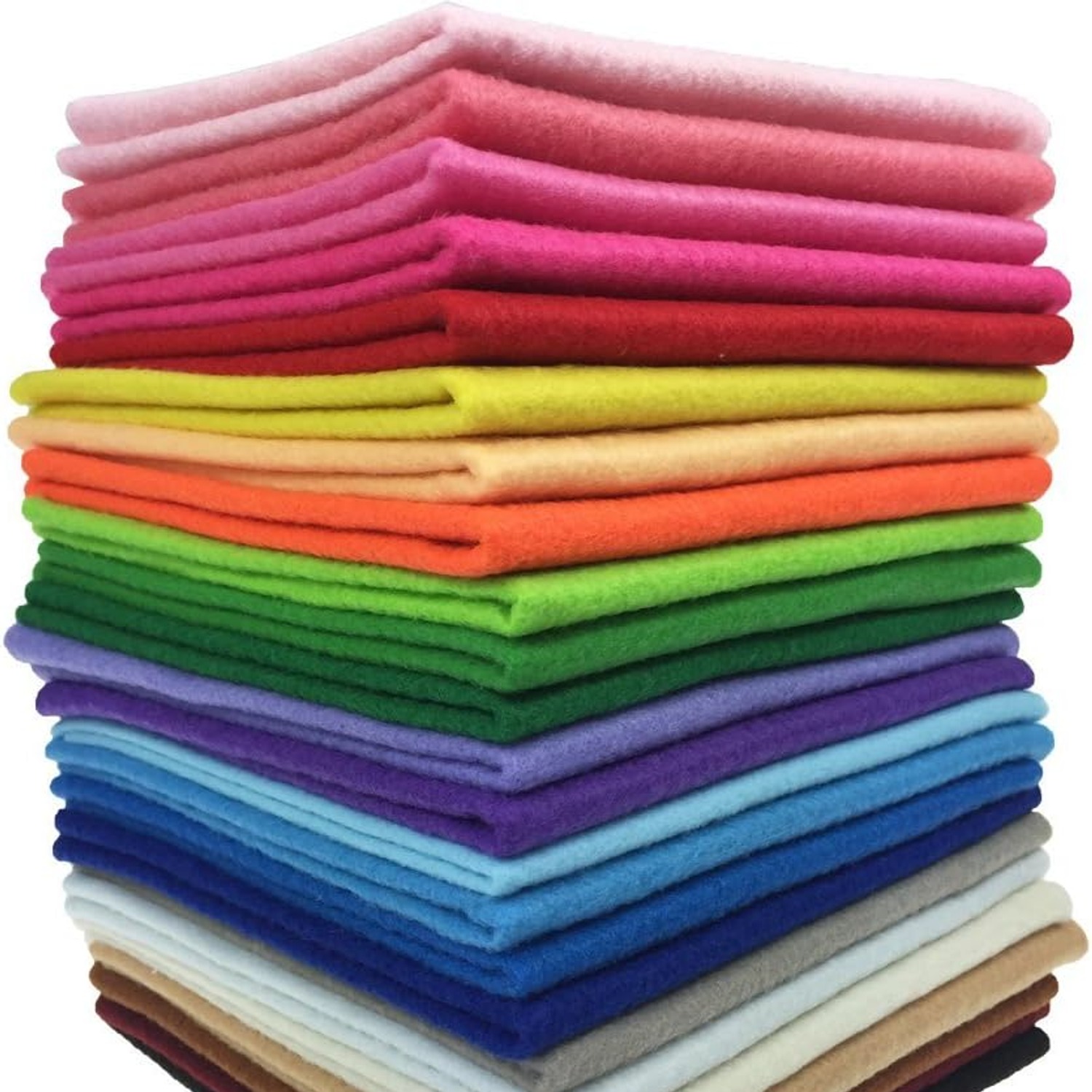
The colour selection is described as 24 different assorted colours. Exact shade names and colour codes are not stated. That makes the pack worth considering for flexible designs where you can choose combinations after opening it. It is less suited to a project that depends on matching a precise shade already in use.
These are ready-sized felt squares for crafts. They are not cut to your requested measurements, and ordering a pack does not provide a single joined piece. Before buying, check the largest section of your design rather than only the total amount of fabric you expect to use.
How nonwoven craft felt works
The sheets can be cut, folded, glued, sewn or stapled. They can also be painted or drawn on. Those options let you choose a method based on what you are making, rather than committing to a sewing-only project.
For a flat decoration, you might cut shapes and glue them to a backing. A small puppet could use sewn joins, with separate felt details added afterwards. A display project might call for staples where they can be kept out of reach and hidden from view.
The joining method still needs a little thought. Glue must suit both the felt and the surface beneath it. Stitches need enough room around the edge. Staples need a suitable backing. Try your chosen approach on a spare piece before using a whole sheet.
Start with a project that fits
This pack can suit small decorations, costume details, puppets and card embellishments. It also offers material for adding shapes to book covers, frames and display boards.
If you are new to felt, begin with a design that uses broad shapes. A flower, simple letter or geometric pattern gives you room to practise cutting and joining. Very narrow sections and tiny details require more control, so save those until you have tried the material.
More experienced crafters can use the colour choice to plan layered designs or patchwork details. Think about the finished object's purpose as well as its appearance. A decoration that hangs on a wall has different demands from a purse that will be handled often.
No load rating or performance standard is supplied for finished items made from these sheets.
Check your pattern before choosing
Draw or print your pattern at its finished size. Place it within a 30 x 30 cm square, then add any allowance needed for seams, folded edges or overlaps. A pattern that just fits before those additions may not fit once they are included.
Also count how many pieces you need in each colour. The pack gives you 24 different colours, not a stated supply of repeated sheets in one shade. If your design needs several large matching sections, an assorted pack may not be the right format.
For small repeated shapes, arrange paper templates together before cutting. Turn them around to see whether they fit more neatly. Leave enough space to cut each edge without damaging the next piece.
A few minutes spent on the layout can prevent a shortage halfway through the project.
Choose colour combinations before attaching anything
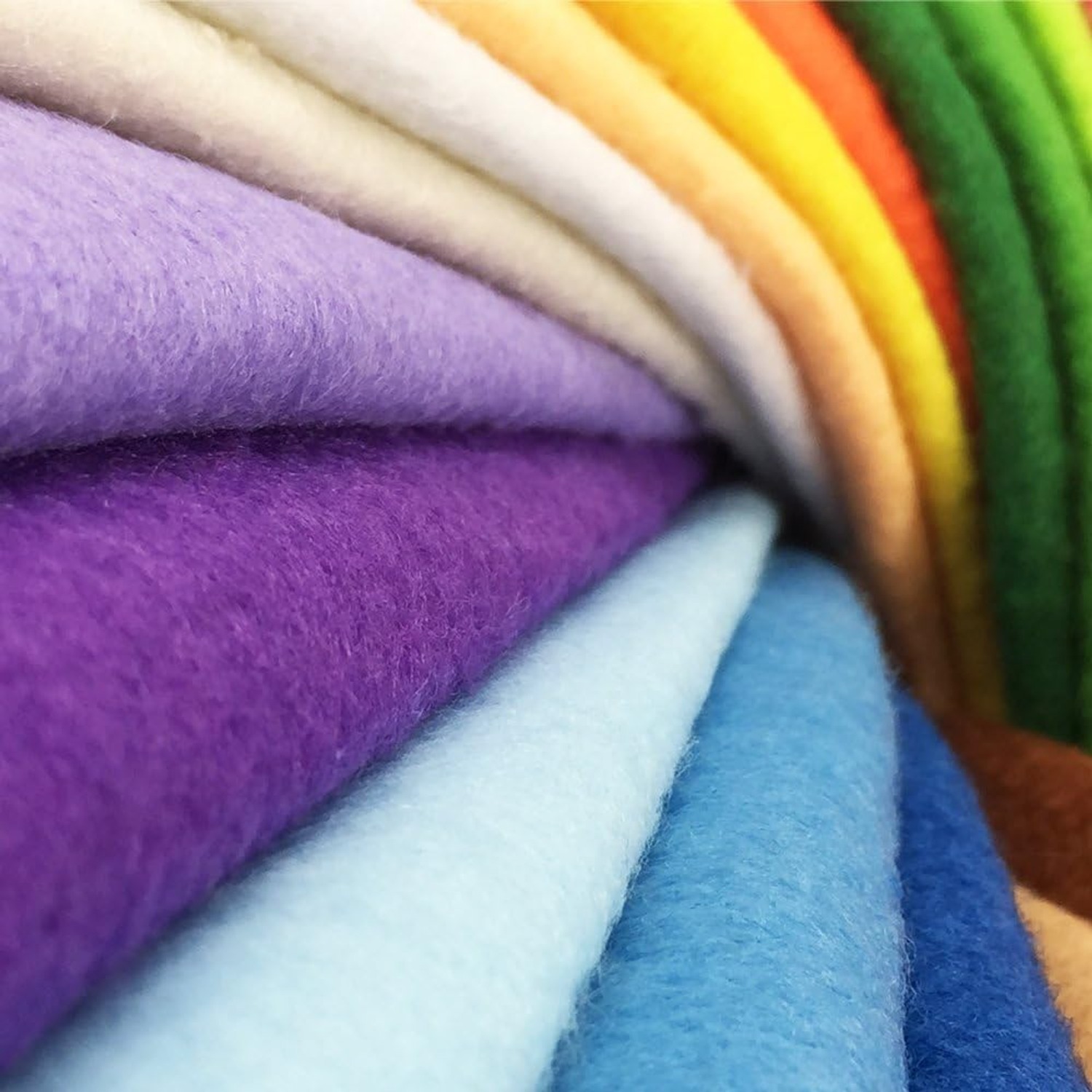
An assortment gives you room to experiment. Put the sheets beside each other in natural light, then choose the colours that work for your design. You might use a strong contrast for lettering or similar shades for a quieter decoration.
Make a loose arrangement first. Place the cut pieces on the backing without glue or stitches and step back to view the whole design. Small details can look different once they sit beside a larger colour area.
For felt for display boards, check that text and shapes can be seen from the distance at which the board will be read. For cards, look at how the felt works with the paper beneath it.
Keep the unused sheets nearby until the design is settled. A colour you did not expect to use may solve a gap in the layout.
Understand the material information
The product details list the material type as felt and the fabric type as synthetic and wool. They do not give fibre percentages. You should not treat the maker's description as confirmation of either pure wool felt or an entirely synthetic fabric.
That missing detail matters if your project has a strict fibre requirement. It may also matter when choosing materials for someone with particular sensitivities. If the exact composition is essential, ask for clarification before ordering.
No certification, age rating or country of origin is specified in the maker's description. Craft use alone does not establish suitability for toys, protective clothing or items used near heat. Assess those requirements separately rather than relying on the general project suggestions.
Pick a joining method for the finished item
For felt for sewing projects, test a short seam on an offcut. Check how the layers sit and whether the stitches give the result you want. Allow enough space between the seam and the cut edge.
For glued projects, follow the adhesive maker's directions. Use a test piece to check appearance and hold before attaching the main shapes. The product information does not name a specific glue or set a drying time.
When using felt for appliqué, test it with the actual backing material. A join that works on card may behave differently on fabric.
Think about the back of the finished item, too. Visible stitches, glue marks or exposed staples can affect how you want to display or give it.
Add drawing and painted details carefully
Drawing and painting are listed uses, but no compatible pen or paint types are specified. Keep a small offcut for trials rather than testing directly on a finished piece.
Try the mark you intend to make, then let it dry according to the pen or paint instructions. Check whether its edges look clear enough for your design and whether it transfers when handled.
If you want repeated details, a simple paper guide can help you place them consistently. Avoid marking every main piece until you know the method works.
For felt for card making, attach the finished decoration only after you are happy with any painted or drawn details. This keeps a rejected test from spoiling the card base.
Plan care before you make a gift
The care instruction is dry clean only. Do not choose this pack on the assumption that a finished item can go into a washing machine.
This is especially worth considering for handmade gifts. A decorative card and an often-used bag have different cleaning needs. Think about where the item will be kept, how it will be handled and whether its care will be practical for the recipient.
Any glue, backing fabric or added trim may bring its own care instructions. Plan around the finished piece as a whole, not just the felt.
If easy washing is a firm requirement, resolve that point before cutting the sheets.
Store leftovers and check your order first
Store unused sheets flat in a clean, dry place. Keep larger offcuts together and put small shapes in a separate container or envelope. Those little pieces may be enough for eyes, petals or lettering in another project.
When the pack arrives, check it before cutting or using the fabric.
Returns are accepted within 14 days from delivery when the fabric is unwashed, uncut, unused and in its original packaging. Customer-paid return postage applies to those returns. Faulty or wrongly described goods are put right free of charge.
A delivery lead time is not stated by the maker, so check the current estimate before planning a time-sensitive project.
The short version
Choose this felt sheet pack when your project calls for several colours in ready-sized pieces.
Check your largest pattern piece, your need for repeated colours and the dry-clean-only care instruction first. If those points fit your plan, lay out a simple design, test your tools on an offcut and build from there.