
The complete guide
A Practical Guide to Choosing White Cotton Fabric
White fabric sounds like an easy choice until you start matching it to a sewing project. A dress pattern may need a certain drape. A quilt needs fabric that works with its other pieces. A home project may call for a level of coverage that a product photograph cannot show.
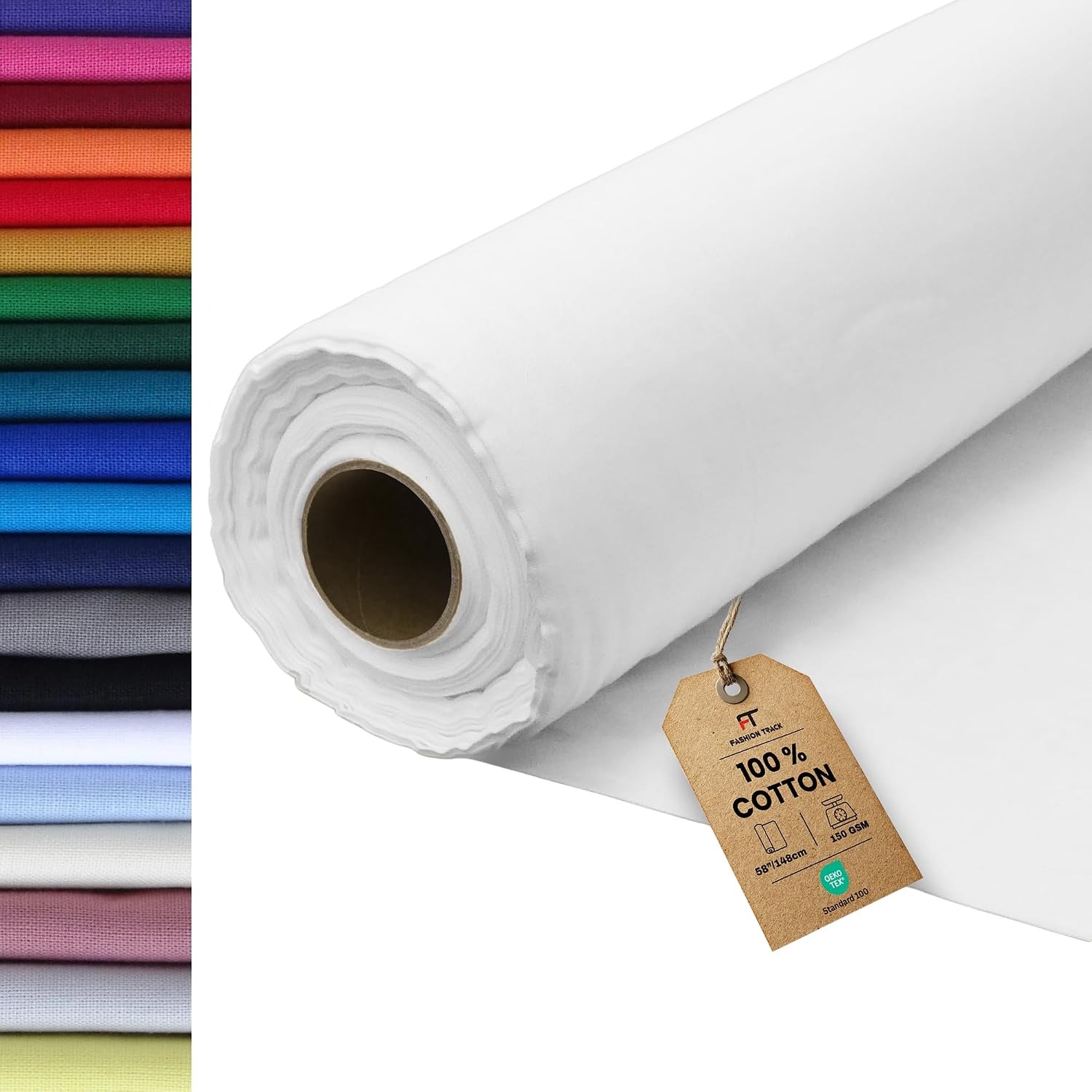
This white cotton fabric offers a clear starting point. You receive one precut piece measuring 5 metres long and 147.5 cm (58 in) wide. It is described as 100% cotton, with a plain weave and a solid white colour. The useful next step is to compare those facts with what you plan to make, rather than assume that any cotton will do.
Start with the project, not just the colour
Before choosing fabric, look at the instructions for your intended make. A sewing pattern usually gives recommended fabric types and a quantity based on fabric width. Those two details matter as much as the finished garment size.
If your pattern calls for woven cotton, this is a fabric worth considering. If it calls for a stretch knit, a heavy furnishing fabric or a very fluid cloth, do not assume this plain cotton is a substitute. Similar colours can hide large differences in how fabrics behave.
For projects without a pattern, sketch the pieces you need and add seam allowances. Include hems, facings and any ties or tabs. That small amount of planning can prevent you from buying enough fabric for the main panels but not enough to finish them.
Understand what the precut includes
This is one piece, 5 metres long and 147.5 cm wide. It is not a service where the fabric is cut to your requested measurement.
That distinction matters if you are making something long. Ordering more than one does not establish that you will receive a single continuous length.
A fixed piece can also help you set the scope of a project. You can lay out your main pieces first, then see whether the remaining fabric will cover smaller parts. Keep a description of the sizes you need instead of relying on a rough estimate made from the finished item's dimensions.
What plain weave means for your choice
Plain weave describes the way the threads cross to form the fabric. It is a woven construction, not a knit. Here, it is paired with a solid white colour and a stated composition of 100% cotton.
For a buyer, that gives a more useful description than colour alone. White plain weave fabric provides an unprinted background, so your design does not have to work around a motif or a stripe. Seams and finishing details can become part of the look.
It does not tell you everything, though. A weave name is not a promise about opacity, stretch or surface finish. If any of those properties is essential, ask for confirmation before ordering or inspect the fabric before committing it to your project.
Read fabric weight carefully
The fabric is described as medium weight at 150 gsm. GSM means grams per square metre. It describes fabric weight across a set area and should not be read as the total weight of the 5 metre piece.
Weight can help you compare cloth, but it cannot tell you exactly how a finished item will hang. Construction, finishing and the design itself all play a part. Treat 150 gsm as one useful fact rather than a complete guide to performance.
The listed thread count is 120. Again, that figure is part of the description, not a reason on its own to choose the fabric. Your pattern's requirements, the intended use and the feel you want deserve more attention than a single number.
Choosing it for dressmaking
Cotton fabric for dressmaking needs to match the shape and construction of the garment. Begin with a pattern that recommends a suitable woven cotton, then check its layout against the stated width of 147.5 cm.
A layout intended for wider cloth may not fit this piece in the same way. Wide pattern pieces, folded sections and the direction of the grain can change the amount needed.
White also makes coverage worth checking. Opacity is not specified by the maker. Before cutting a garment, hold the fabric over the background it will sit against and view it in different light. If you decide to add a lining, plan that as a separate material choice rather than assuming this product includes one.
Using it for quilting and crafts
Quilting and crafts are both listed uses. Plain white cotton can give you an unprinted area within a design, whether your other pieces are patterned or solid.
When selecting cotton fabric for quilting, consider how it will work with the rest of your materials. Compare weights where possible and follow your quilt pattern's preparation advice. There is no need to assume that every cotton fabric behaves in exactly the same way.
For smaller craft projects, a cutting plan is still useful. Group pieces by size and leave room for seam allowances. Set aside usable offcuts for testing stitches or practising a finish. A scrap can answer a practical question before you put a needle through a main piece.
Thinking about home decor
Home decor is another listed use, but it covers a wide range of projects. A decorative sewn item and a heavily used seat cover ask very different things of a fabric.
Choose cotton fabric for home decor by looking at the job it must do. Does it need to block light, resist wear or hold a particular shape? The maker does not give blackout, upholstery or water-resistance performance, so none of those should be assumed.
For a simple decorative project, compare the fabric's width and weight with your plan. If your item will be washed, make sure that its other parts, including trims and fastenings, can follow a compatible care routine.
Inspect before you wash or cut
When the fabric arrives, open it carefully and keep the packaging. Check the piece while it is still unwashed, uncut and unused.
Look at the colour in the light where the finished item will be used. Check the measurements and inspect the surface. This is also the time to decide whether its appearance suits your plan, rather than after you have started cutting.
The return conditions allow 14 days from delivery for fabric that is unwashed, uncut, unused and in its original packaging. The customer pays return postage. Faulty or wrongly described goods are put right free of charge. Those conditions make an early inspection worthwhile.
Prepare for sewing with care
Machine washing is listed, but the maker does not state a washing temperature, shrinkage percentage or tumble-drying setting. Check any care information supplied with the fabric before choosing your routine.
For many cotton projects, prewashing is a useful preparation step. Make that decision after inspection, once you are sure you want to keep the fabric. Measure again after washing and drying rather than assuming the original dimensions will remain unchanged.
Pressing can help with accurate cutting and sewing, but no iron setting is specified here. Test your chosen setting on a small offcut. The same cautious approach applies to stain treatments, dyes or printing products, none of which has a confirmed result in this product.
Get more from your cutting plan
Lay out all the main pieces before making the first cut. Check grain direction, fold lines and seam allowances against your instructions. Moving a piece slightly at this stage is easier than replacing one cut in the wrong direction.
Avoid using every spare centimetre in your first layout. Leave enough room to handle edges and make any adjustments your pattern requires. If preparation changes the usable dimensions, work from the measurements in front of you.
Once the main pieces are cut, sort the leftovers by size. Larger offcuts may suit another part of the project, while small scraps are useful for stitch tests. Keep them clean and dry with a note of the fabric details.
The short version
This is one 5 metre precut of plain white, 100% cotton fabric, measuring 147.5 cm wide. It has a stated weight of 150 gsm and is listed for dressmaking, quilting, crafts and home decor.
Choose it by matching those facts to your project. Check your pattern's width requirements, do not assume opacity or stretch, and inspect the fabric before washing or cutting. A careful choice at the start gives your sewing plan a much clearer path to the finished item.