
The complete guide
A Buyer's Guide to Lightweight Fusible Interfacing
When fabric needs a little help holding its shape
A collar can look neat on the cutting table yet feel too soft once it is sewn. A facing may need more body, or a small fabric project may need support without a thick extra layer. These are the kinds of jobs that call for interfacing.
Lightweight fusible interfacing adds support behind the main fabric. It is not intended to turn every fabric into a firm panel. The aim is to give a chosen area more shape while keeping the result suitable for the project.
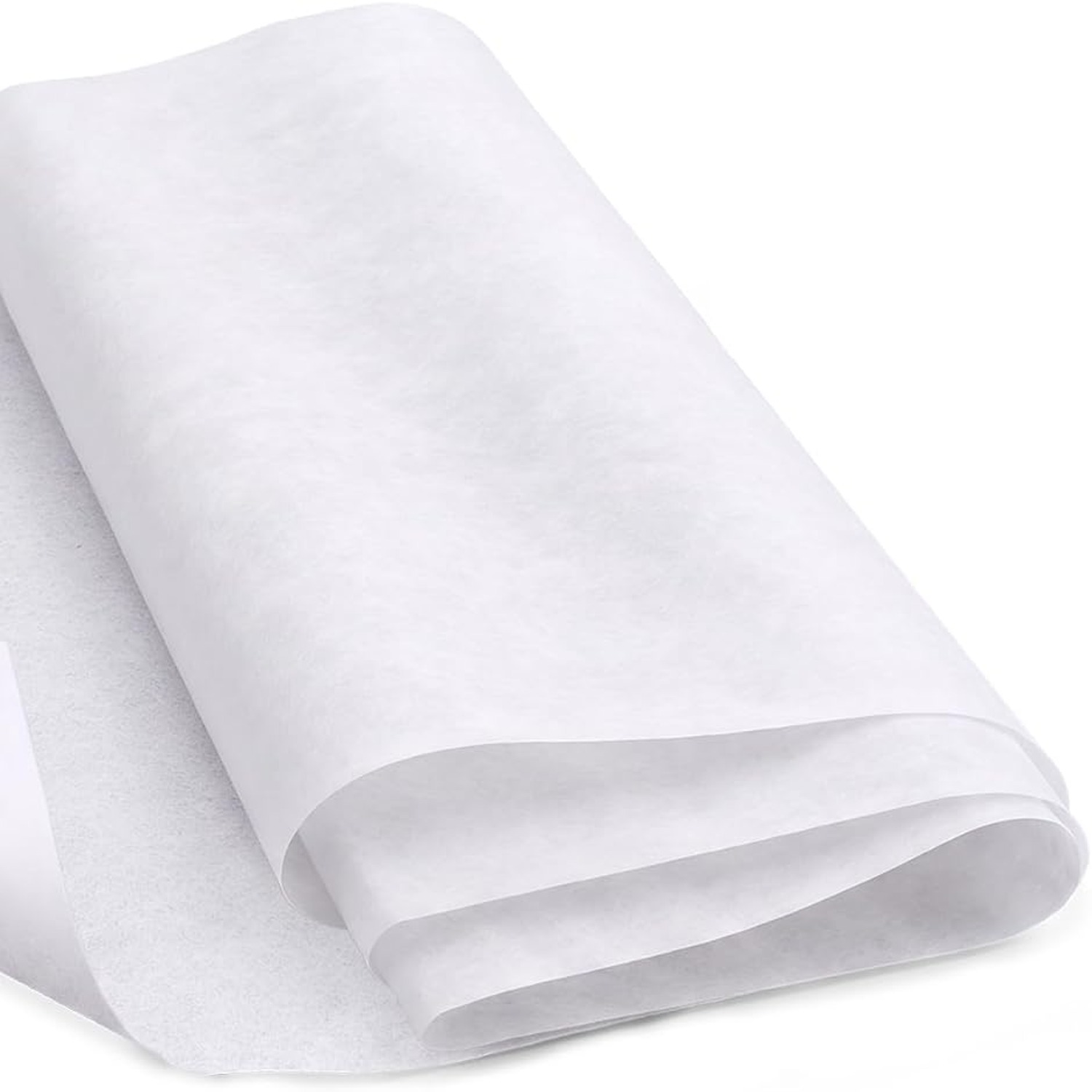
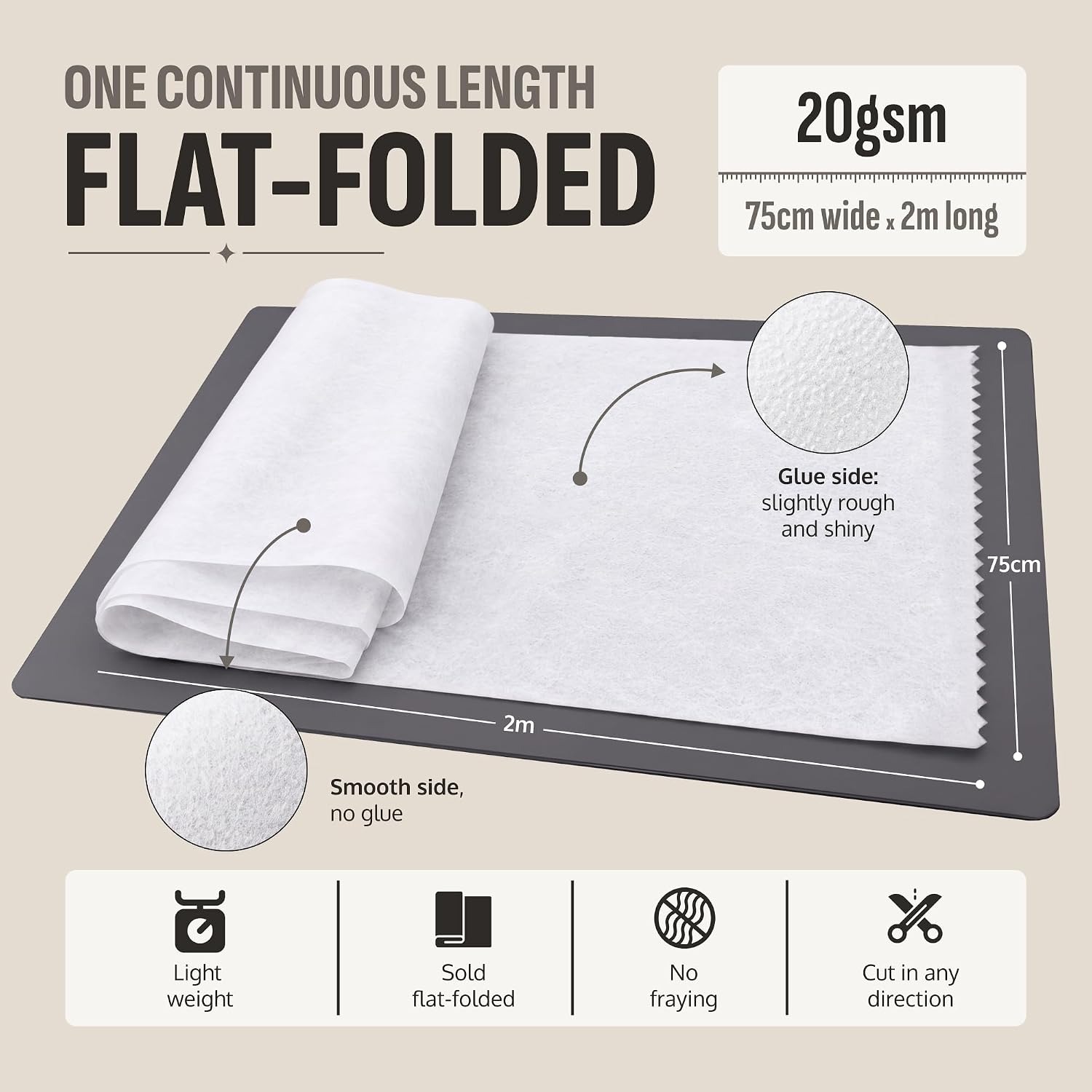
This piece measures 75 cm wide by 2 metres long. It is white, non-woven and made from 100% polyester. It comes as one precut, so you can plan your pattern layout around a known size before you start cutting.
What fusible interfacing does
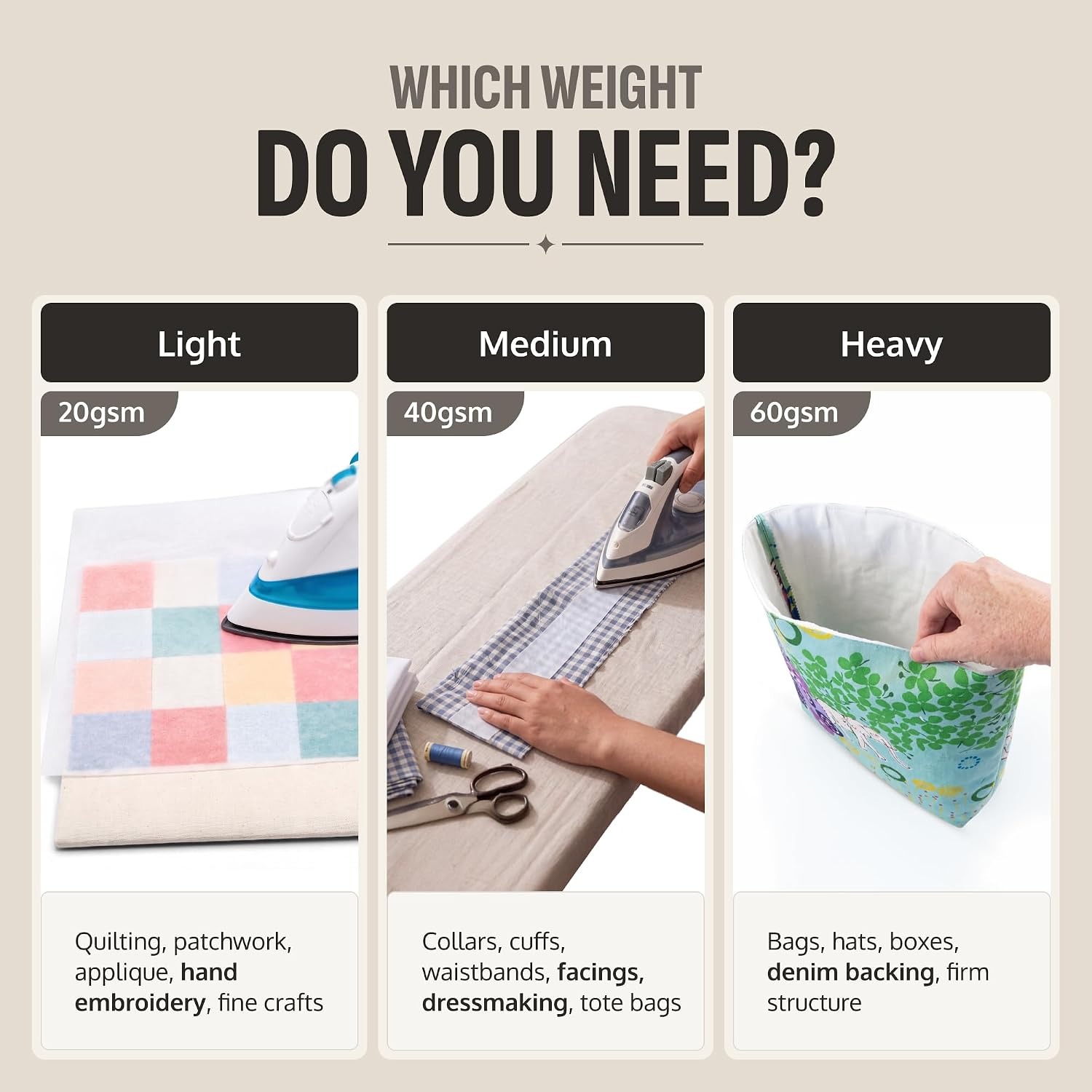
Interfacing sits behind the main fabric in areas that need reinforcement. In dressmaking, that might mean a cuff, collar, waistband or facing. In craft work, it may mean a small panel that needs a little more body.
The fusible backing attaches with heat and pressure from an iron. This product is single-sided, which means it is not the same as a double-sided web used to join two fabrics together.
The support you get depends partly on the fabric you pair it with. A light woven cloth and a heavier cloth will not feel the same after fusing. That is why a scrap test tells you more than the word “lightweight” alone.
Think of interfacing as part of the fabric choice, rather than a final fix. It should work with the fabric and the pattern, not fight against them.
Is lightweight support the right choice?
Start with your sewing pattern. If it names a weight or type of interfacing, use that guidance as your starting point. A pattern designed around firm support may not work as intended with a lighter option.
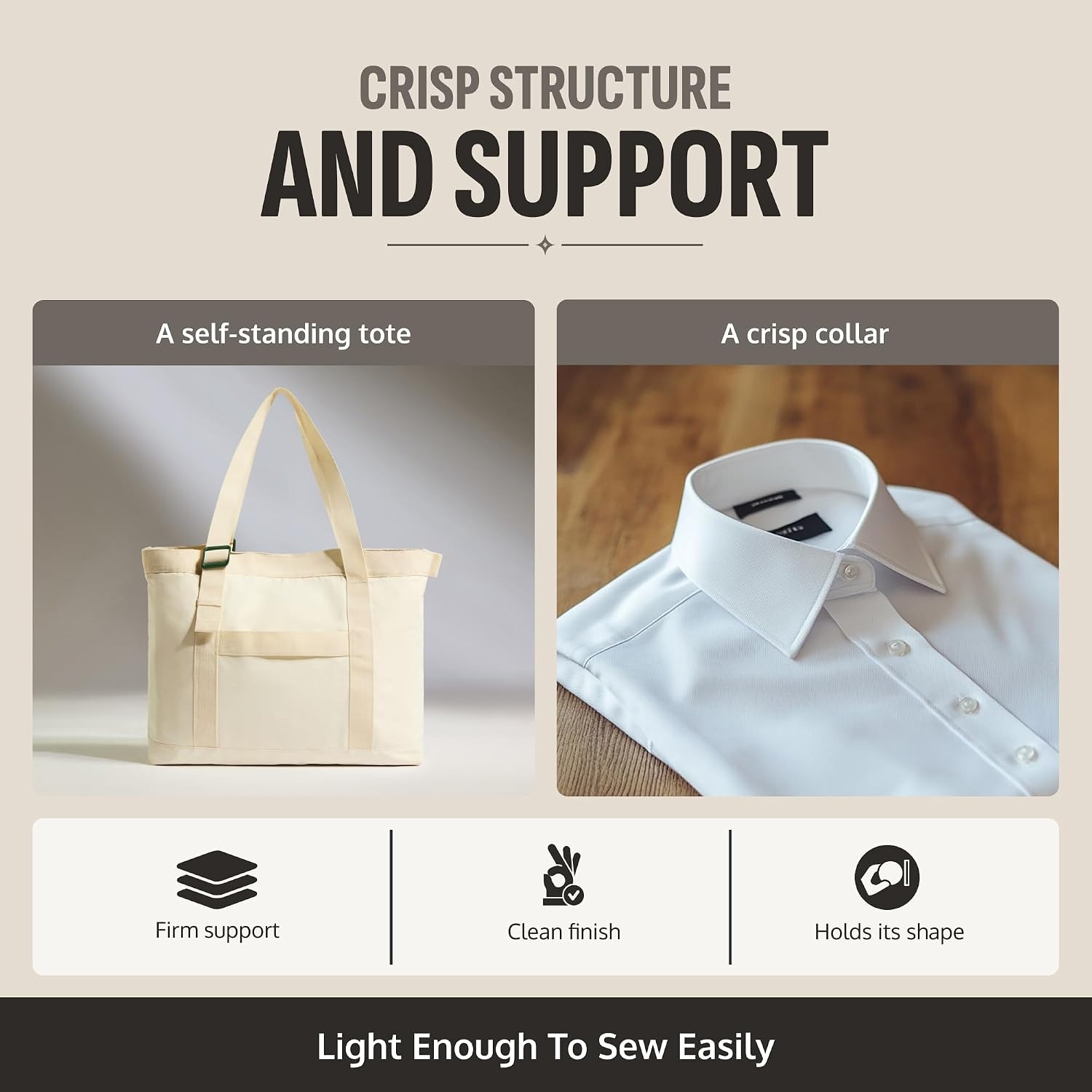
This lightweight iron-on interfacing is worth considering when you want gentle structure. Collars and cuffs are listed uses, but they still need to match the finish you have in mind. A softly shaped collar and a very crisp collar can call for different support.
The same applies to crafts. A purse panel may benefit from a light backing, while a box-shaped project may need much more structure. Do not assume that every product listed for bag making will make a bag stand on its own.
If you are unsure, compare a fused scrap with an untreated scrap. Bend them, fold them and feel the difference. That small check can prevent a disappointing result later.
Understanding the size and quantity
The pack contains one piece, not several separate sheets. Its width is 75 cm and its length is 2 metres, giving a total area of 1.5 square metres.
That area is useful for planning, but it does not tell you exactly how many garments or accessories you can make. Pattern shapes leave gaps, and large pieces may need more width than small details.
Lay the interfacing pattern pieces within a 75 cm wide space before cutting. Check their full size, including any allowances required by the pattern. If your sewing instructions tell you to trim interfacing differently from the main fabric, follow those instructions.
This is precut interfacing, not a custom cutting service. If a project needs a single piece wider than 75 cm, this pack will not provide that width. Check the layout before ordering rather than relying on total area alone.
Non-woven polyester and white colour
The material is listed as 100% polyester with a non-woven construction. The finished feel of your project will still depend on the main fabric, the fused area and how the item is assembled.
White interfacing also needs a visual check. Hold a sample behind your chosen cloth, then look at it in the light where the finished item will be worn or used. Pale or thin fabric may show a backing differently from a dark, dense cloth.
The listed item weight is 48 g. That is not a weight-per-area figure, so it should not be read as a grams-per-square-metre rating.
There is no need to guess at missing measurements.
Check whether your fabric can take the heat
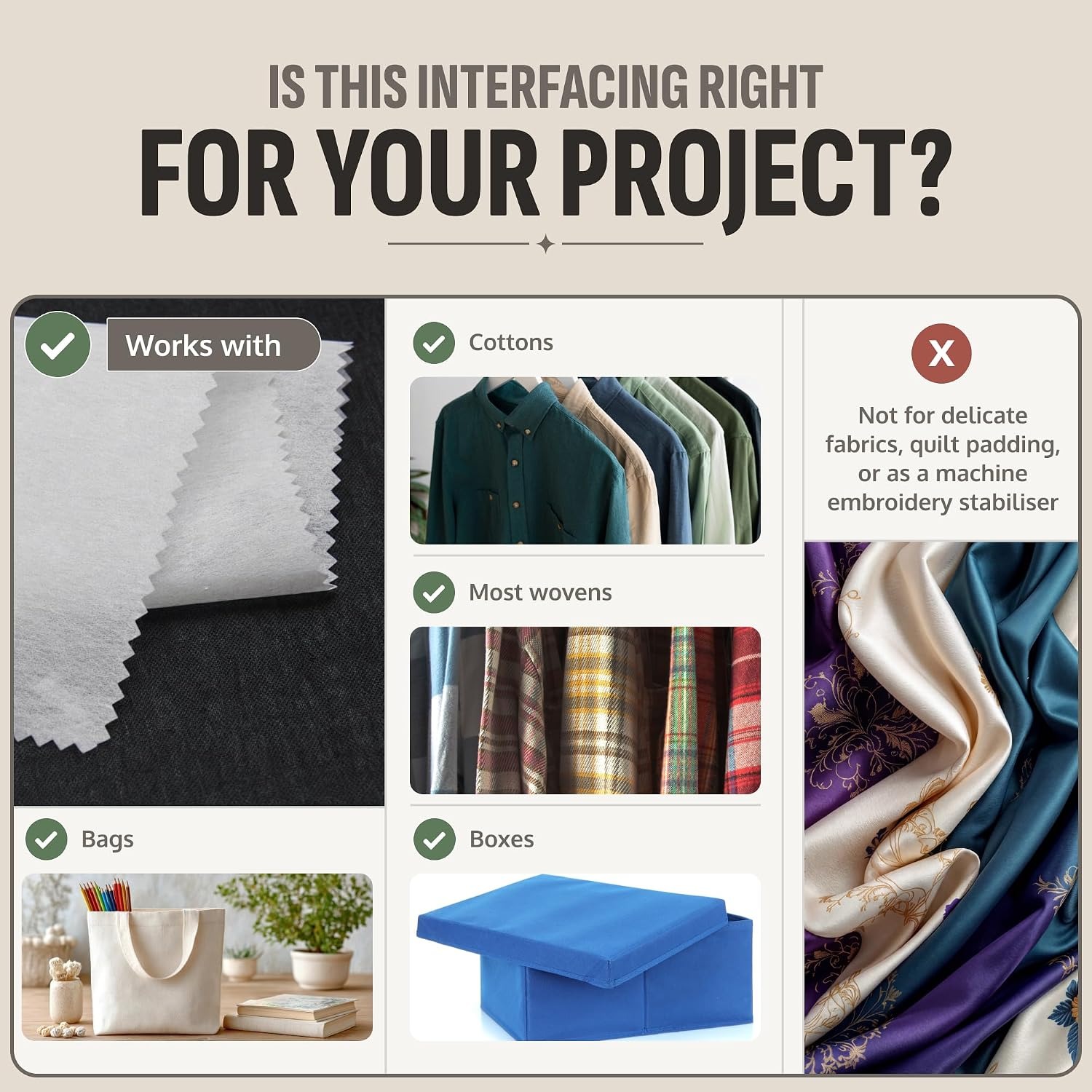
Fusible interfacing needs an iron, so the main fabric must tolerate the application process. The supplied guidance names cotton, linen, denim and woven fabrics among the intended pairings.
Those names are a starting point, not a promise that every fabric will behave the same way. Surface finishes and fabric blends can change how a material responds. Always check the care guidance for your main fabric.
For a heat-sensitive cloth, do not raise the iron temperature just to force a bond. If the cloth cannot tolerate the required heat, a sew-in interfacing may be a more suitable route.
A fabric stabiliser should help the project, not leave a mark or change its surface in an unwanted way. Test first, especially when working with fabric you cannot easily replace.
Make a test piece before committing
Use a spare piece of the actual project fabric where possible. A different scrap may not give you a useful picture of the final result.
Apply a small piece of interfacing following the supplied instructions. Allow it to cool before judging the bond or feel. Handling it while warm is not a fair test of how it will sit once ready for sewing.
Look at both sides. Check for visible changes on the right side, then feel whether the fabric still bends as you want it to. Fold the sample where a collar edge, cuff or facing might turn.
If the test feels too firm or too soft, stop before cutting the full set of pieces. Changing your choice at this stage is much easier than trying to solve the problem after assembly.
Applying the iron-on backing
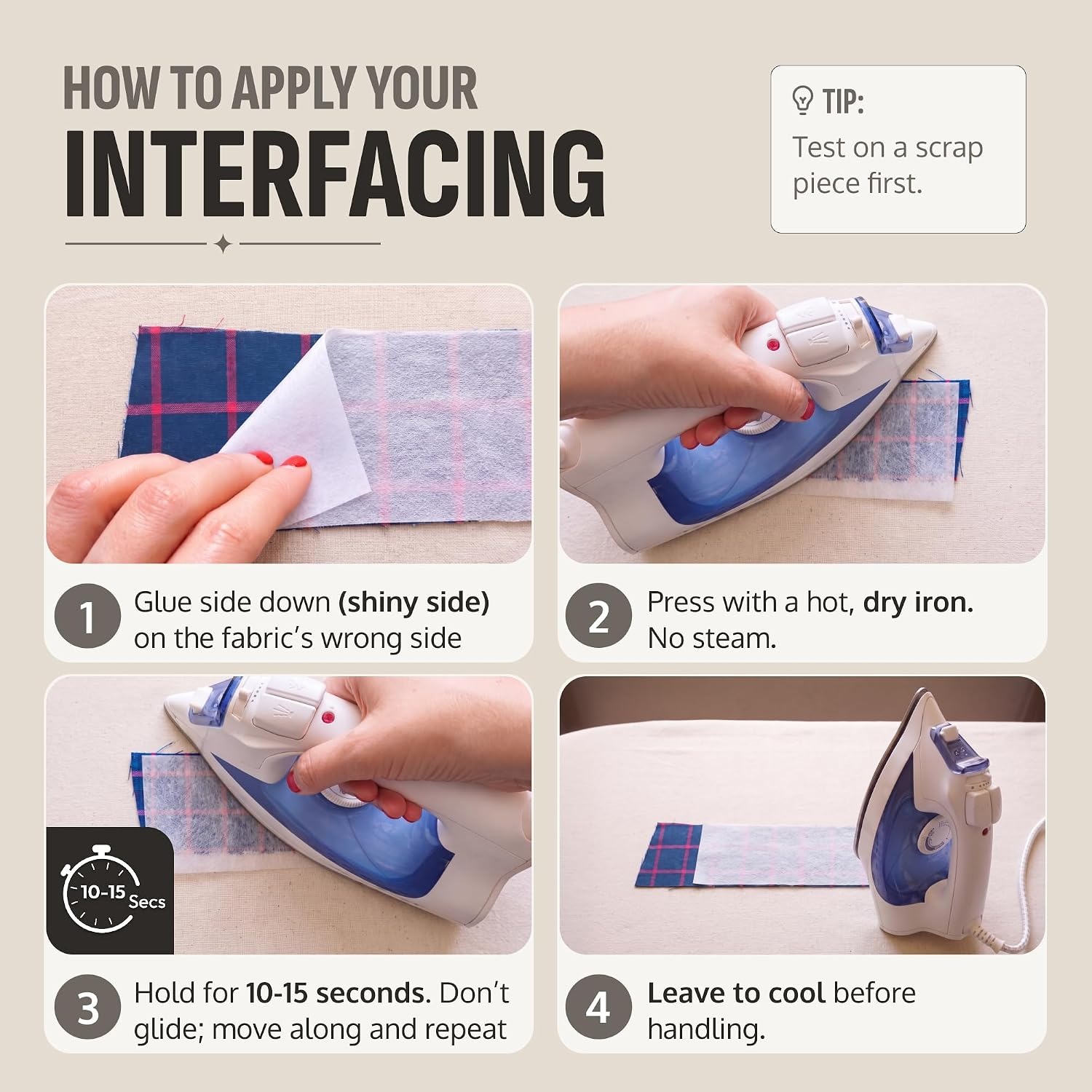
The supplied application guidance calls for a hot dry iron, without steam. Press firmly for 10 to 15 seconds per area rather than sliding the iron across the cloth.
Lift and move the iron to the next area, then repeat. Work in a controlled way so that you do not miss sections or shift the layers. Check any instructions included with the product before starting.
A numeric iron temperature is not specified by the maker. Do not translate “hot” into a setting that could damage your main fabric. If the application requirements and the fabric's care limits do not agree, choose another support method.
Once pressed, leave the fabric to cool before handling. Then check the result before moving on to sewing. A few minutes spent checking is easier than finding an issue inside a finished seam.
Uses beyond collars and cuffs
Dressmaking interfacing is only one part of the picture. The listed uses also include purses, caps, fascinators, costumes, aprons, cushions and bunting.
For these projects, ask what needs support and how much. A small detail may need backing while the surrounding fabric should stay soft. You do not always need to interface an entire project.
Embroidery backing and applique backing are also listed uses. Check that permanent fusible support suits your method before applying it. This product is not described as a tear-away or wash-away stabiliser.
For patchwork or quilting work, keep its role clear. Interfacing provides support; it is not padded wadding. Choose each layer for the job it needs to do rather than treating them as interchangeable.
Care, storage and planning ahead
The listed care instruction is “iron only”. The maker does not provide specific washing, tumble-drying or dry-cleaning settings for a finished project.
That matters if you are making an item that will need regular cleaning. Check the guidance supplied with the interfacing and consider the care needs of every material in the finished piece. Do not assume a wash setting from the fibre name alone.
Before use, keep the piece clean and stored away from your working iron. Keep useful offcuts together so you can check their size before starting another small project.
If you are sewing to a deadline, confirm delivery details when ordering. No lead time is specified here. Allow time for a test piece as well as the main sewing work, particularly when the fabric and interfacing combination is new to you.
Check suitability before cutting
Open and inspect your order before committing it to a project. Confirm that the piece, colour and lightweight type match what you intended to buy.
The stated change-of-mind return period is 14 days from delivery. Fabric must be unwashed, uncut, unused and in its original packaging. The customer pays return postage.
Testing and return eligibility need separate thought. Cutting a sample means the fabric no longer meets the uncut condition, so make your initial checks before taking scissors to it. Contact us if you need help deciding what to do.
Faulty or wrongly described goods are put right free of charge. Keep the packaging and order details while any concern is being resolved.
The short version
Choose this piece when your project calls for lightweight, single-sided fusible support. You receive one white non-woven polyester precut measuring 75 cm by 2 metres.
Check your pattern, confirm that the main fabric can tolerate fusing, and plan the layout before cutting. Then test the feel and bond on a scrap. Those simple checks help you decide whether this interfacing will give your sewing the support it needs.