
The complete guide
A Buyer's Guide to Floral Cotton Fabric Squares
Getting enough variety for patchwork can mean buying more fabric than a small project needs. You might want a little of several prints, yet end up with long leftover strips from each one. A pack of cotton fabric squares offers another starting point, especially when the pattern matters more than having a large piece of any one fabric.
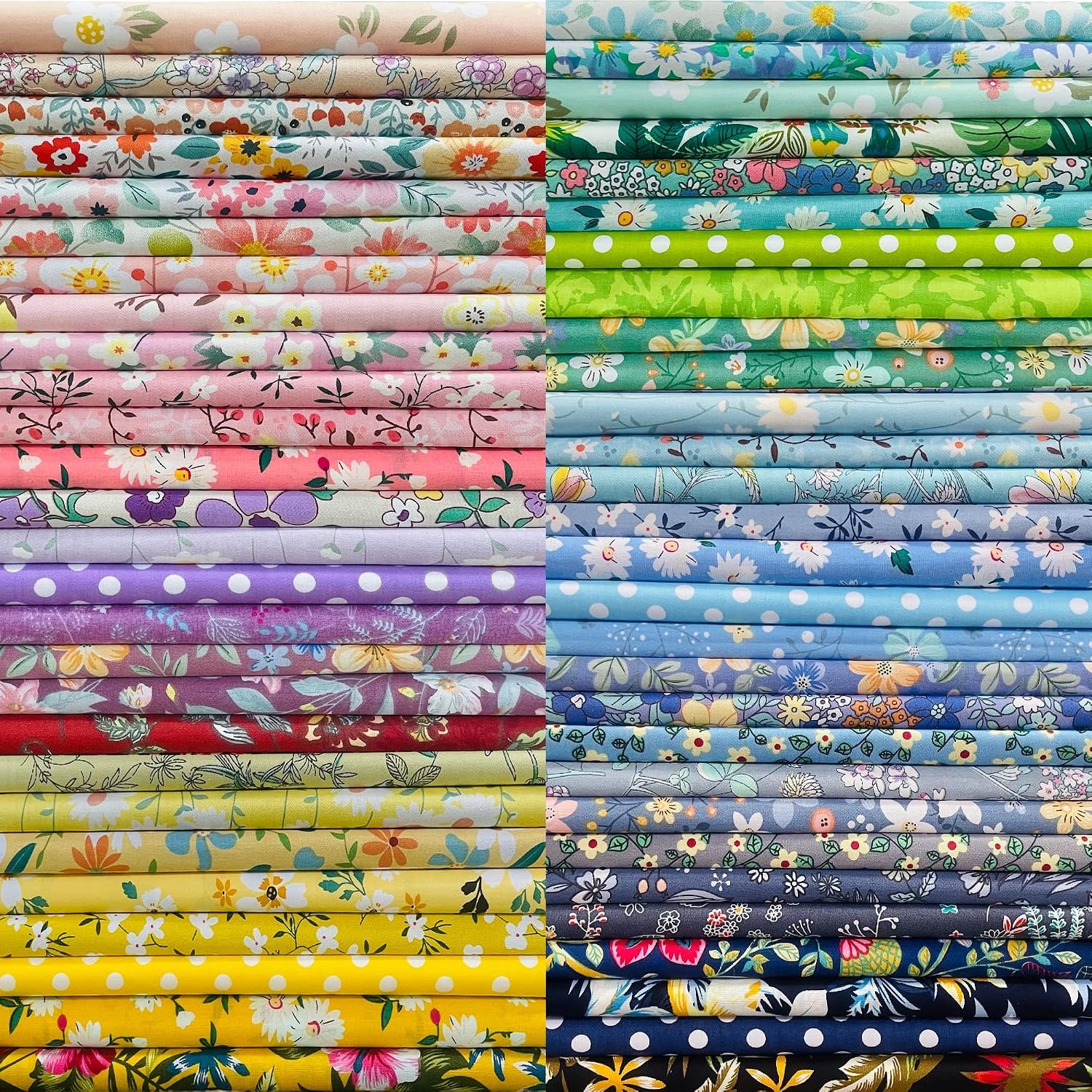
This pack contains 50 squares in 50 different floral prints, one of each. Each square is stated as 20 x 20 cm (8 x 8 in). That format gives you pieces to arrange before you sew, whether you are planning a cushion front, quilt blocks or a collection of small gifts.
The main question is whether those separate squares fit the way you want to work. Here is what to consider before choosing them.
What precut squares change about a project
Precut quilting fabric saves you the initial job of cutting every starting square from a larger length. You still need to check measurements and follow your pattern, but you can begin by looking at the prints and trying out a layout.
That can be helpful when choosing fabric is the part that slows you down. Instead of buying many separate pieces, you have an assortment in one pack. Spread them out and see which patterns you want next to each other.
The format also sets limits. You cannot get a single large panel from one square, and there is only one piece of each print. If your pattern calls for several matching blocks, you will need to rethink the layout or source additional fabric separately.
Understand the fabric and the weave
These squares are listed as 100% cotton with a sateen weave and a thread count of 200. Those are useful details when comparing fabric packs, but they do not tell you everything about how a finished project will behave.
Thread count is not a substitute for fabric weight, shrinkage information or care testing. The maker does not give a weight per square metre or a shrinkage percentage. Avoid using the total pack weight of 240 g to guess those missing details.
When the pack arrives, handle the fabric and consider it alongside your pattern. If the finished piece will include lining, backing or other fabrics, check how those materials work together. A project is affected by all its layers, not just the decorative front.
Decide whether fifty different prints suit your idea
The appeal of this patchwork fabric pack is variety. Fifty different floral prints let you build a mixed design without repeating one pattern throughout.
That variety suits a loose, collected look. It may be less suitable for a design that depends on identical prints in every corner. Before buying, decide whether you want a varied floral surface or a tightly repeated pattern.
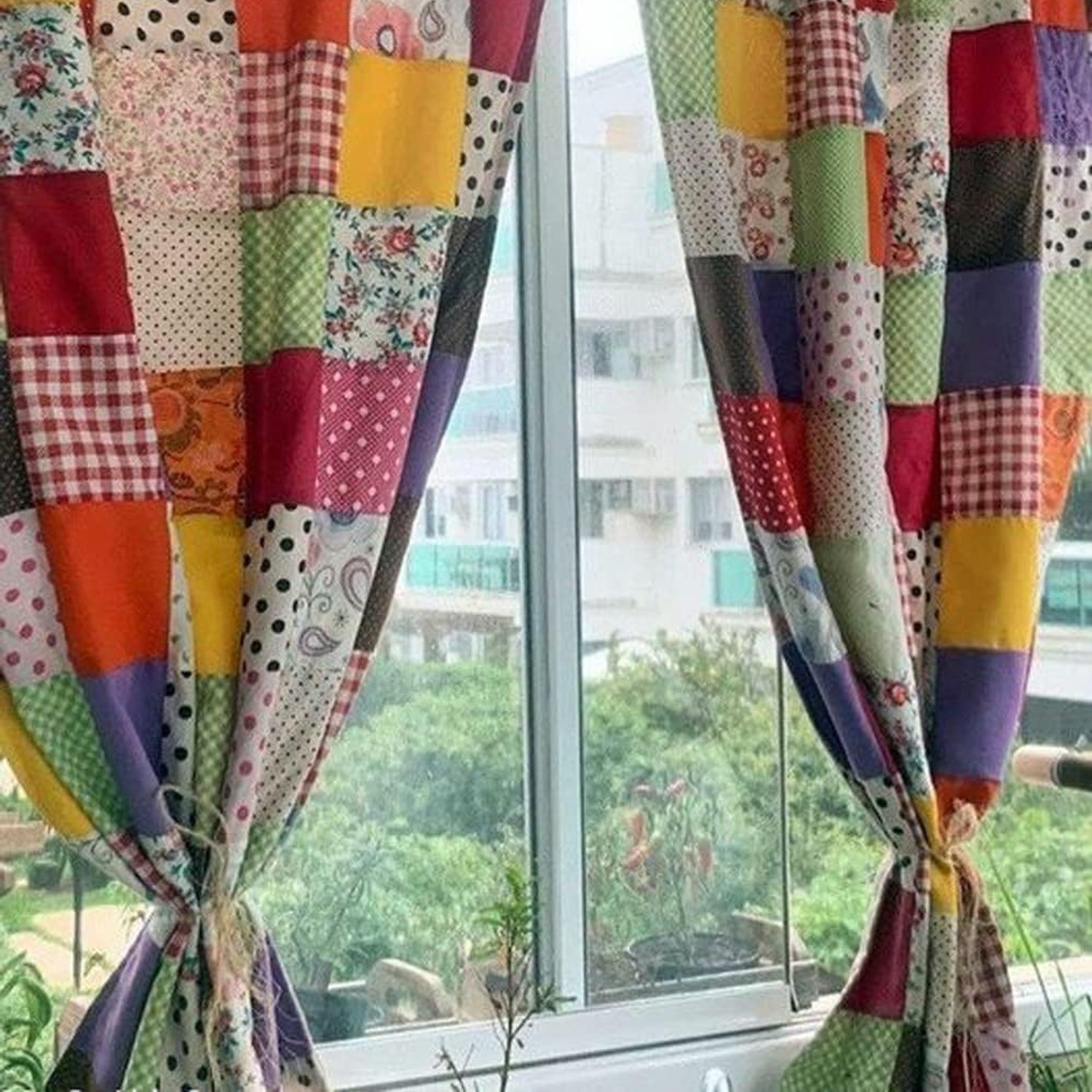
Exact colour combinations are not specified by the maker. If your project must match an existing curtain, chair or paint colour, do not assume the assortment will provide that match. For a less strict design, you can choose the squares you prefer and save the others for another piece.
Plan using the finished size, not just the cut size
The listed 20 x 20 cm measurement describes the supplied square. Once you join squares, the seams take up some fabric. Your finished blocks will therefore be smaller than the pieces you started with.
Use the seam allowance required by your pattern and calculate the finished size before stitching. Do the same for any smaller shapes you plan to cut from the squares. A piece that looks large enough at first may fall short once seams are included.
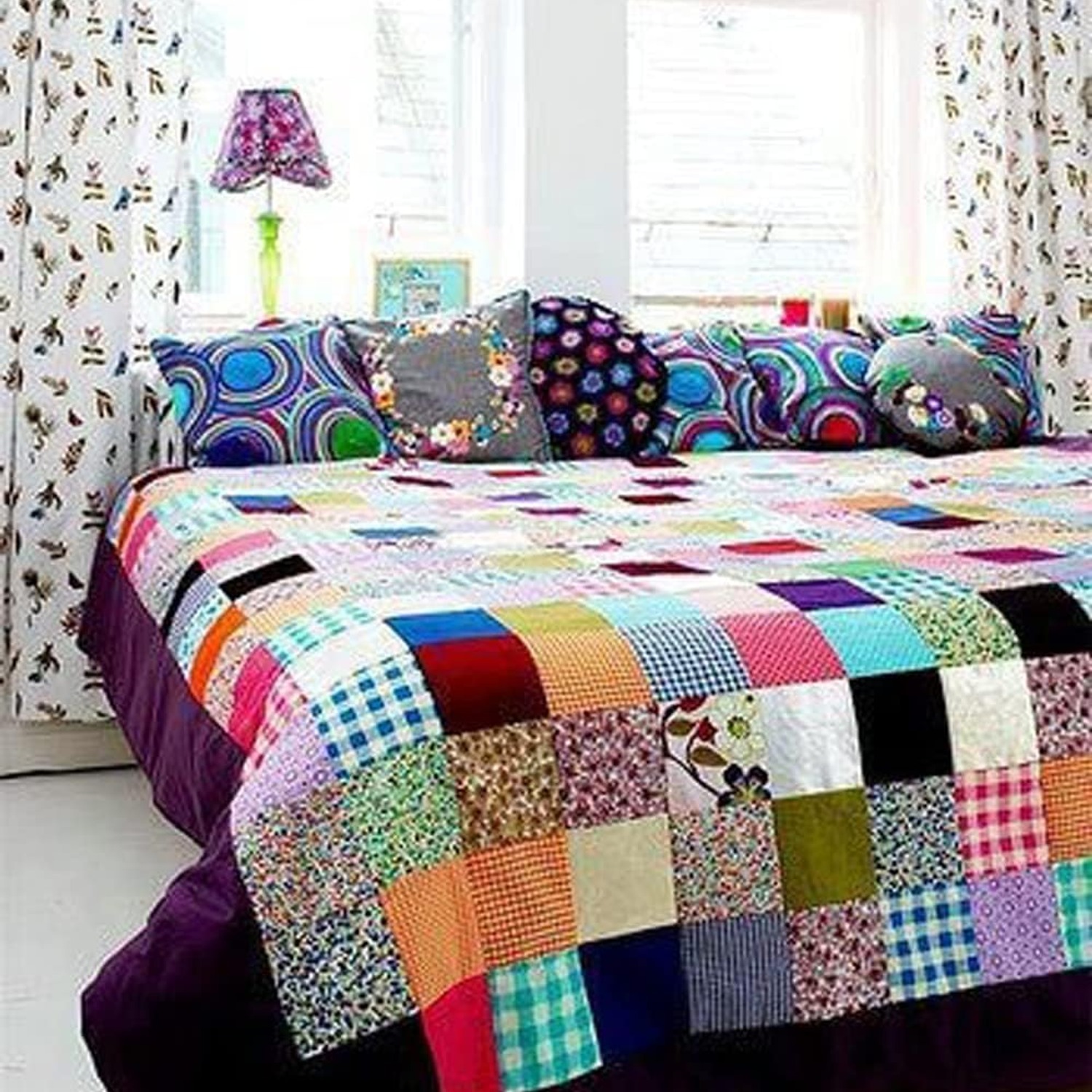
The pack does not have a stated finished quilt size. How far it goes depends on your layout, any borders and the amount of additional fabric you use. Draw a simple plan on paper before deciding that one pack is enough.
Choose a manageable first project
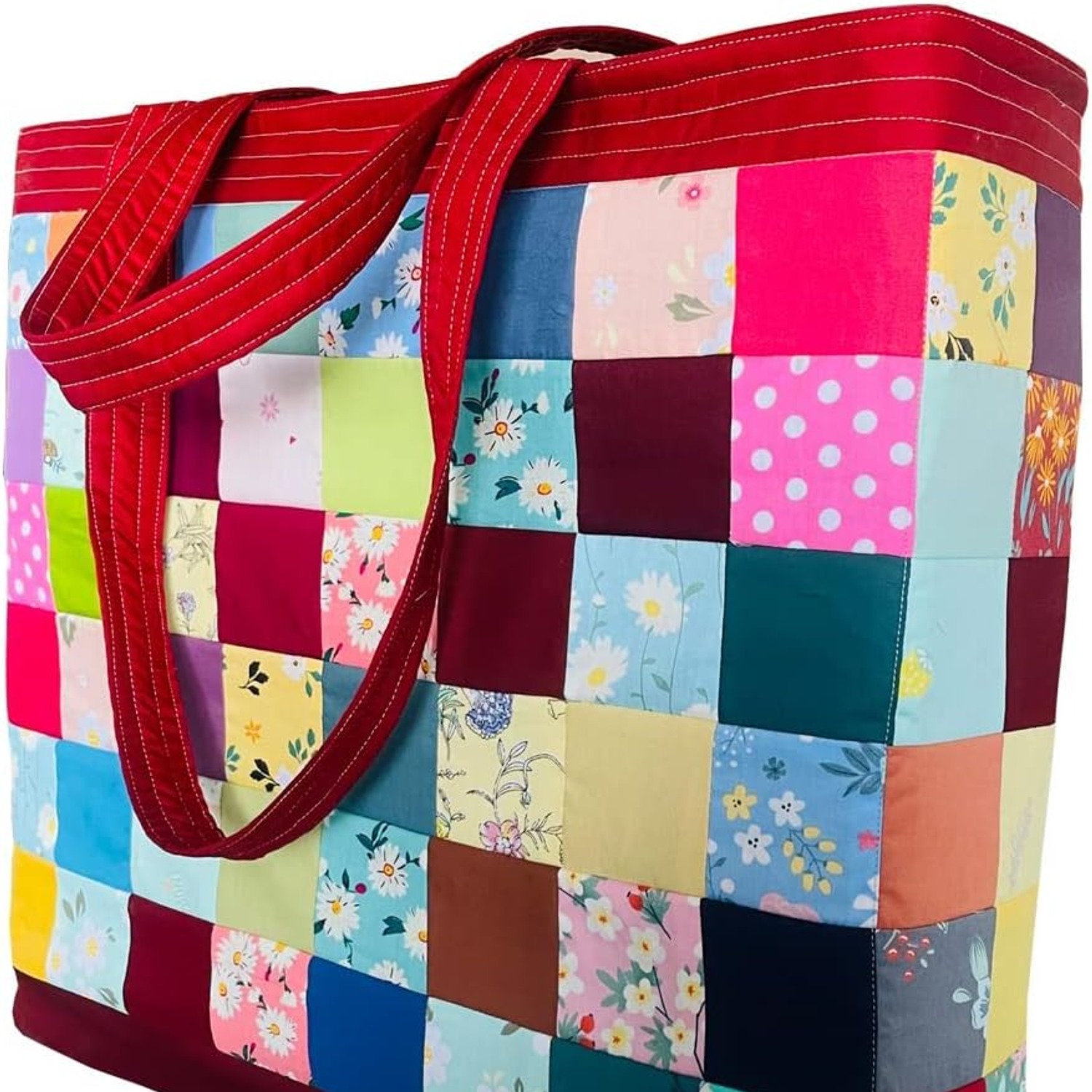
For someone trying patchwork for the first time, a small flat project can be a useful place to begin. Joining squares gives you practice with seam placement and matching edges without also needing a complex shape.
A patchwork cushion front is another option. It lets you work with several prints while keeping the layout easy to see. Remember that a complete cushion cover may also need a back panel and a closure, depending on the pattern.
Small pouches can make use of individual squares or joined pieces. Their size and construction vary, so check the cutting list carefully. The pack supplies the decorative fabric, not every material needed to finish the item.
Lay out the prints before sewing
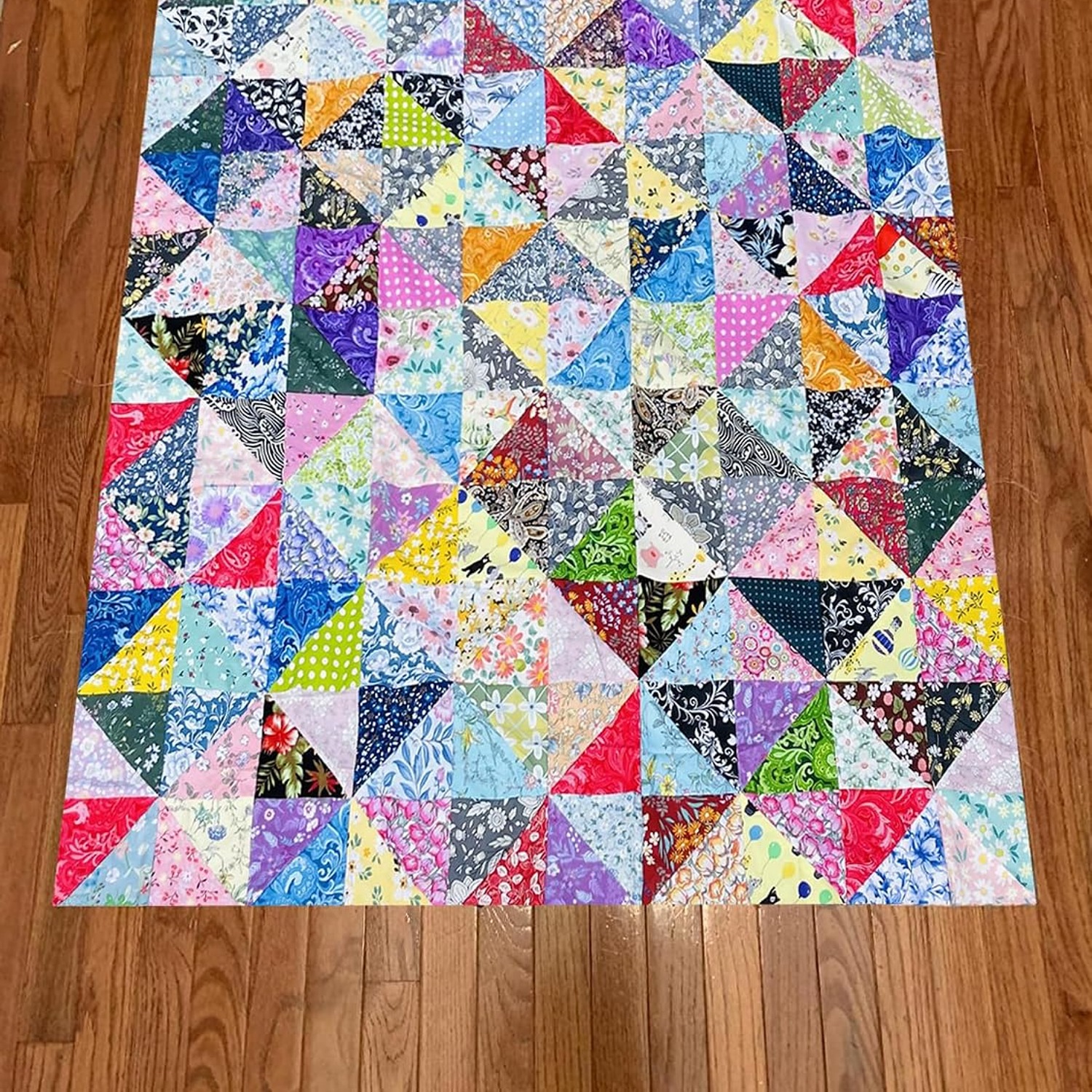
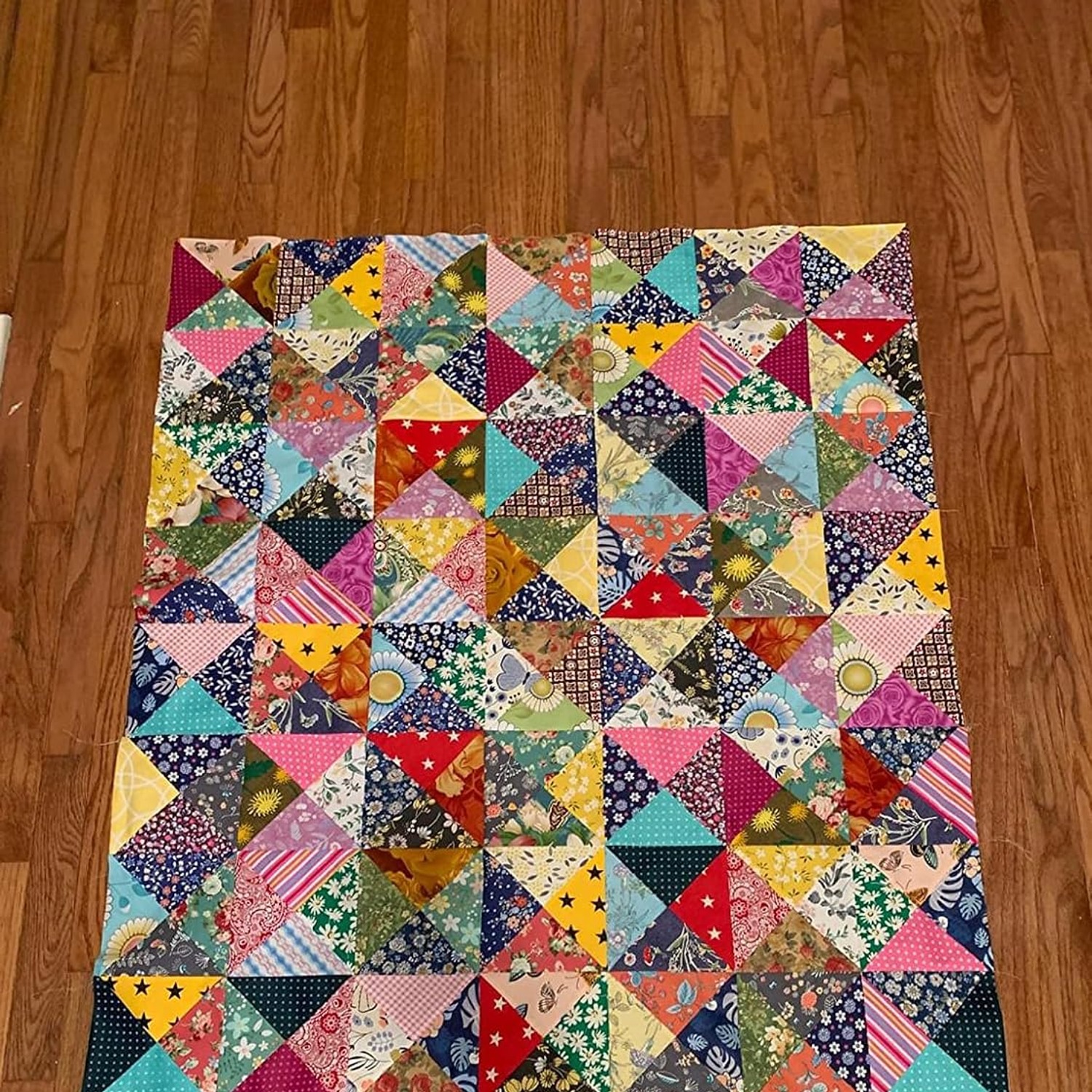
Take a little time to arrange the floral cotton fabric before joining anything. A print that looks quiet on its own may stand out when placed beside a different one. Seeing the full layout helps you decide where each square belongs.
You might spread stronger-looking prints across the project, or keep similar-looking pieces together. There is no required arrangement. The useful step is to make those choices while you can still move the squares.
Take a photo once you like the layout. It gives you a reference when you lift pieces to sew them. For a larger design, keeping each row in order can also prevent a good arrangement from getting mixed up halfway through.
Check what else your pattern needs
A fabric pack is not the same as a sewing kit. Only the 50 squares are listed here. Instructions, thread, needles and fastenings are not specified as included.
Read the whole pattern before starting. A quilt may call for batting and backing. A pouch may need lining or a zip. A cushion cover may require extra fabric that cannot be pieced from the remaining squares.
This is also the time to check whether the project has special material requirements. Decorative cotton fabric alone does not establish heat protection, toy safety or other tested performance. Choose the rest of your quilt making supplies or sewing materials to match the intended use.
Use smaller pieces thoughtfully
You do not have to keep every square whole. Fabric squares for sewing can be cut into smaller shapes when your chosen pattern calls for them.
Plan those cuts first. Mark out the pieces you need and check that the seam allowances are included. Cutting one small section from the middle may leave less useful fabric than placing the same shape near an edge.
Keep useful offcuts together rather than discarding them straight away. They may suit a later patchwork detail or a stitching test. With only one square of each print, even a small remainder may be worth saving if you want to repeat that print elsewhere.
Check care before committing to a wash
Machine washing is listed for this cotton quilting fabric. The maker does not specify a wash temperature, drying method or ironing setting. Check any care guidance supplied with the pack rather than choosing settings on assumption.
Before washing all the squares, think about your pattern and your usual fabric preparation method. Cotton can change during washing, and raw edges can fray. An offcut test can help you assess colour transfer and changes in size before treating a larger piece.
A finished item also needs care suited to its other parts. Lining, batting, trims and fastenings may have different needs from the outer fabric. Keep that in mind while choosing them, rather than leaving the care decision until the project is complete.
Inspect the pack while return options are open
When your fabric arrives, check the contents before washing, cutting or sewing. Confirm that the square format suits your pattern and look over the assortment while the pieces are still unused.
Keep the original packaging during that check. Returns are allowed within 14 days of delivery for fabric that is unwashed, uncut, unused and in its original packaging. The customer pays return postage.
Faulty or wrongly described goods are put right free of charge. If something appears wrong, raise it before working with the fabric. Delivery timing is not specified by the maker, so check the order information if you have a class, gift date or other deadline in mind.
Buying for another person
A sewing fabric bundle can be a thoughtful gift when you know the recipient enjoys patchwork. This one is most relevant to someone who likes floral prints and works with smaller pieces.
Check their preferred format if you can. Someone making large garments or matching panels may need continuous lengths rather than squares. A patchwork maker may welcome the assortment, but could still have a particular colour scheme in mind.
You do not need to choose their whole project for them. Knowing that they use precuts and enjoy mixed floral prints is a more useful guide than guessing a finished item they might make.
The short version
The 100% cotton sateen fabric offers a starting point for patchwork, quilt blocks and small sewing projects.
Check your pattern, allow for seams and plan any extra materials before you begin. Then take time to arrange the prints. That simple step helps turn a varied pack of fabric into a design that feels like your own.