

The complete guide
Choosing Fusible Fleece for Your Next Sewing Project
When fabric needs a little more support
A fabric can look just right for a project yet feel too thin once you start handling it. A bag panel may need more body, or a small sewn item may need support around its stitching. Choosing the right inner layer matters as much as choosing the visible fabric.
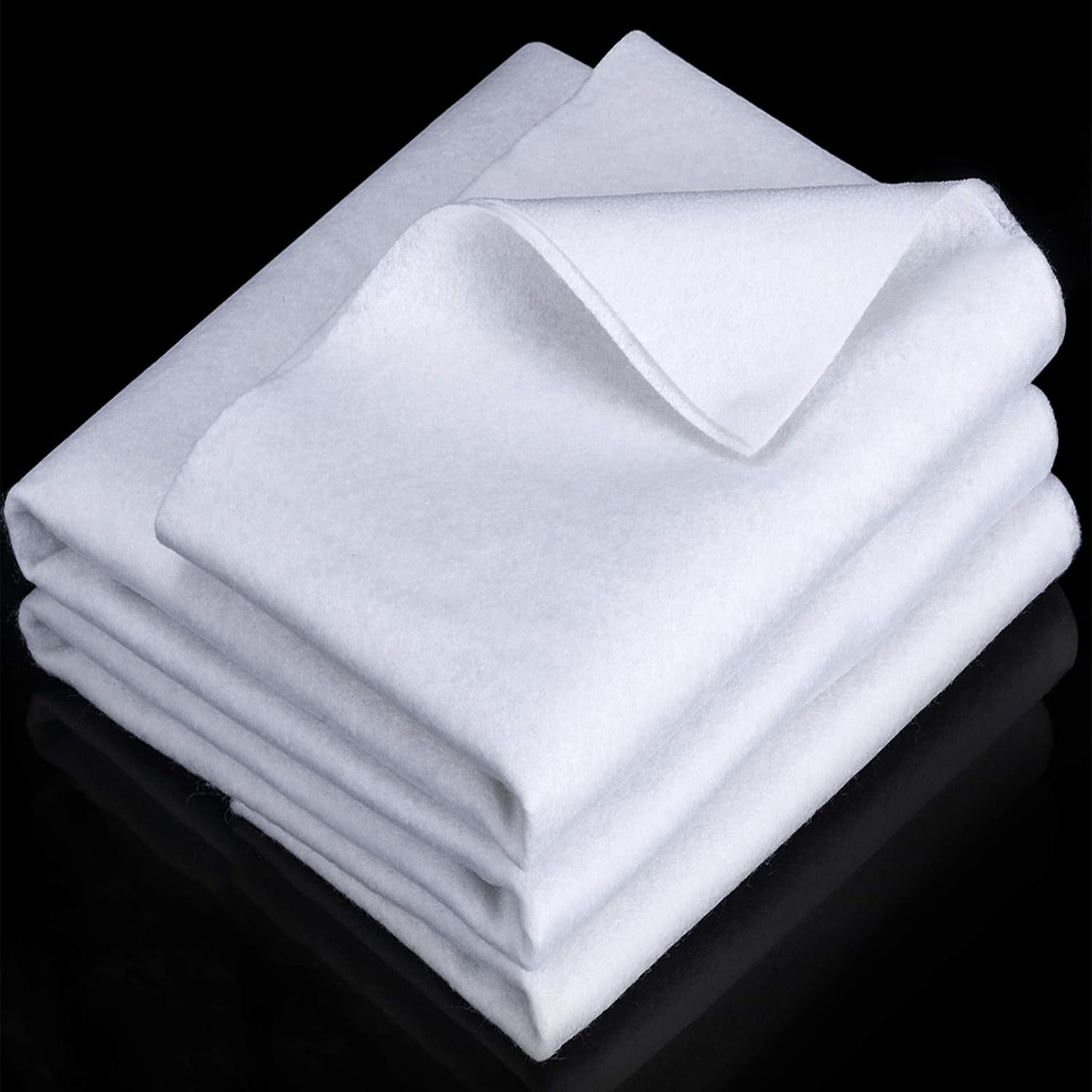
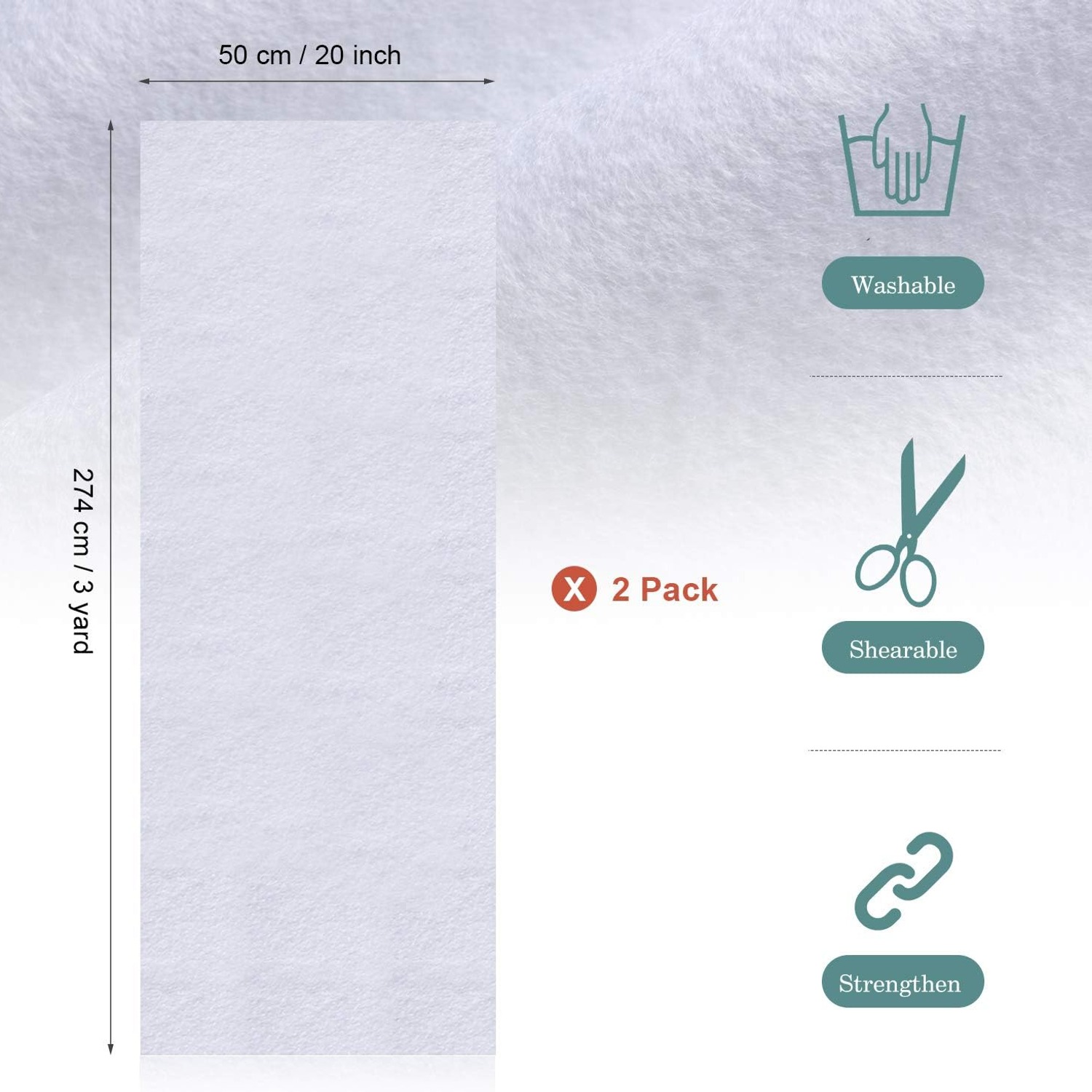
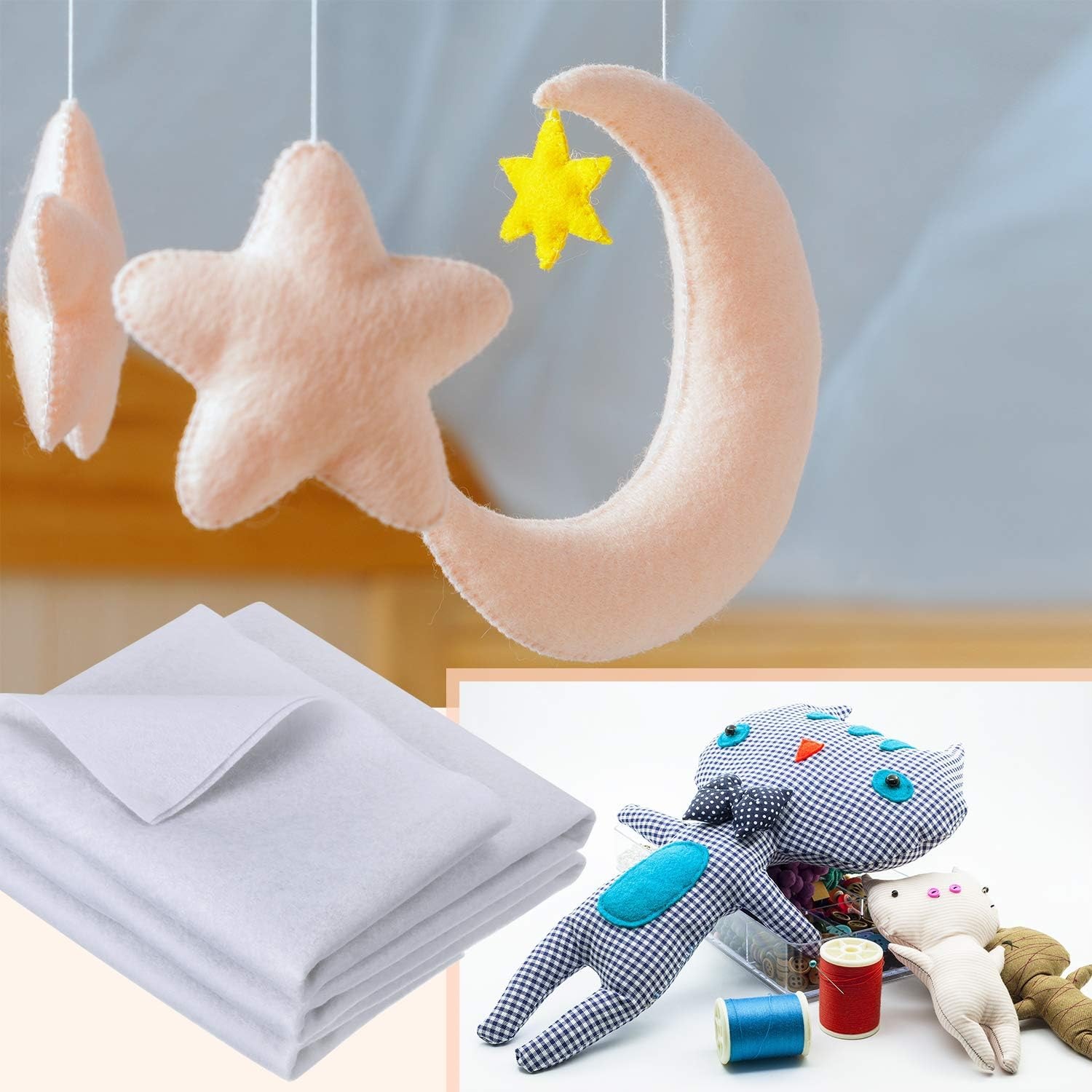
Fusible fleece is one option when you want soft reinforcement that attaches with an iron. This pack contains two white pieces, each measuring 51 x 274 cm (20 x 108 in). It is described for light and medium-weight fabrics.
The important question is whether it matches your pattern. Soft support is different from firm structure, and an iron-on backing will not suit every fabric. Taking a few minutes to check those points can save you from cutting into a pack that does not meet your needs.
How the iron-on backing works
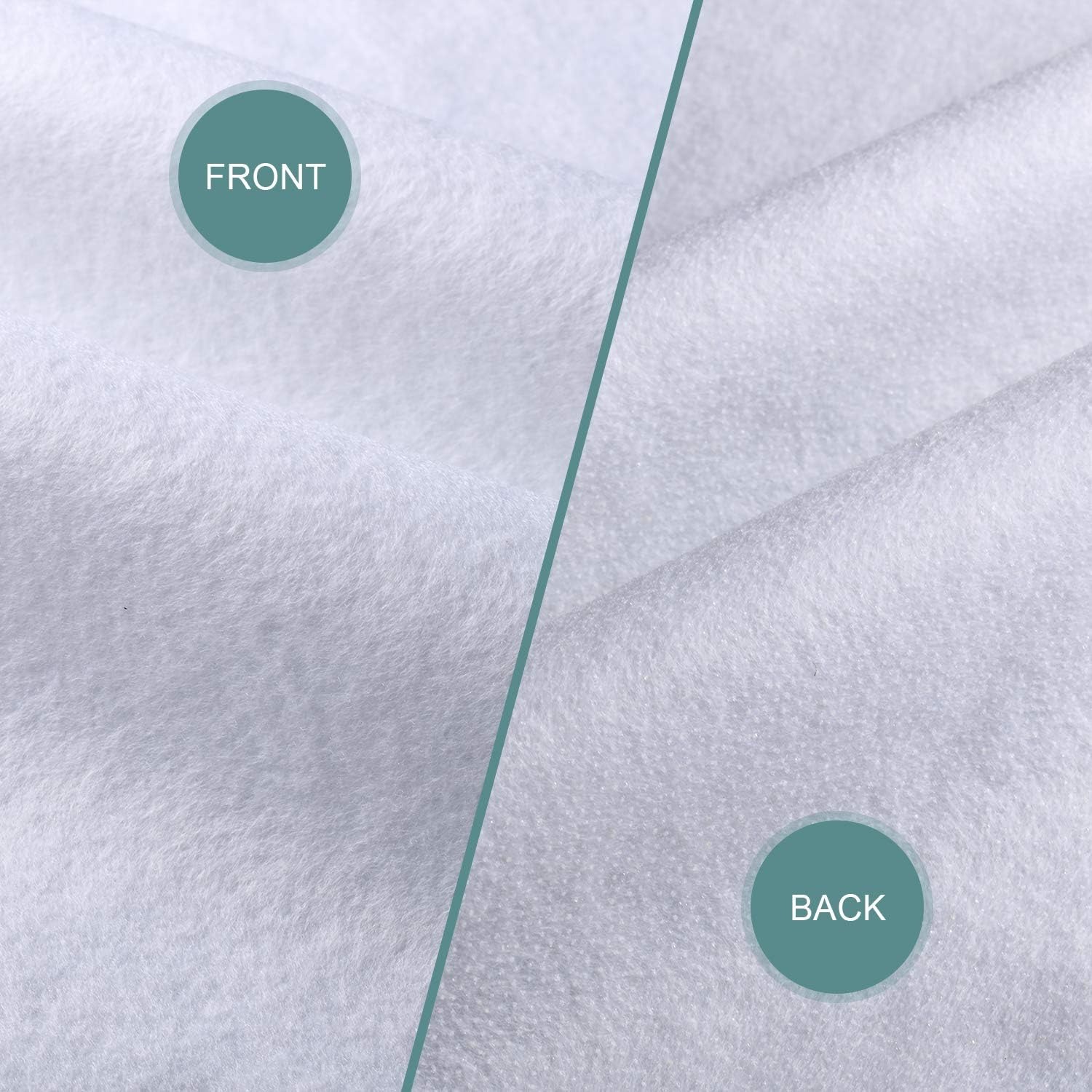
This is single-sided fusible fleece. One surface is soft fleece, while the other carries an adhesive activated by a hot iron. The product notes describe the adhesive side as slightly rough, which helps you tell the surfaces apart.
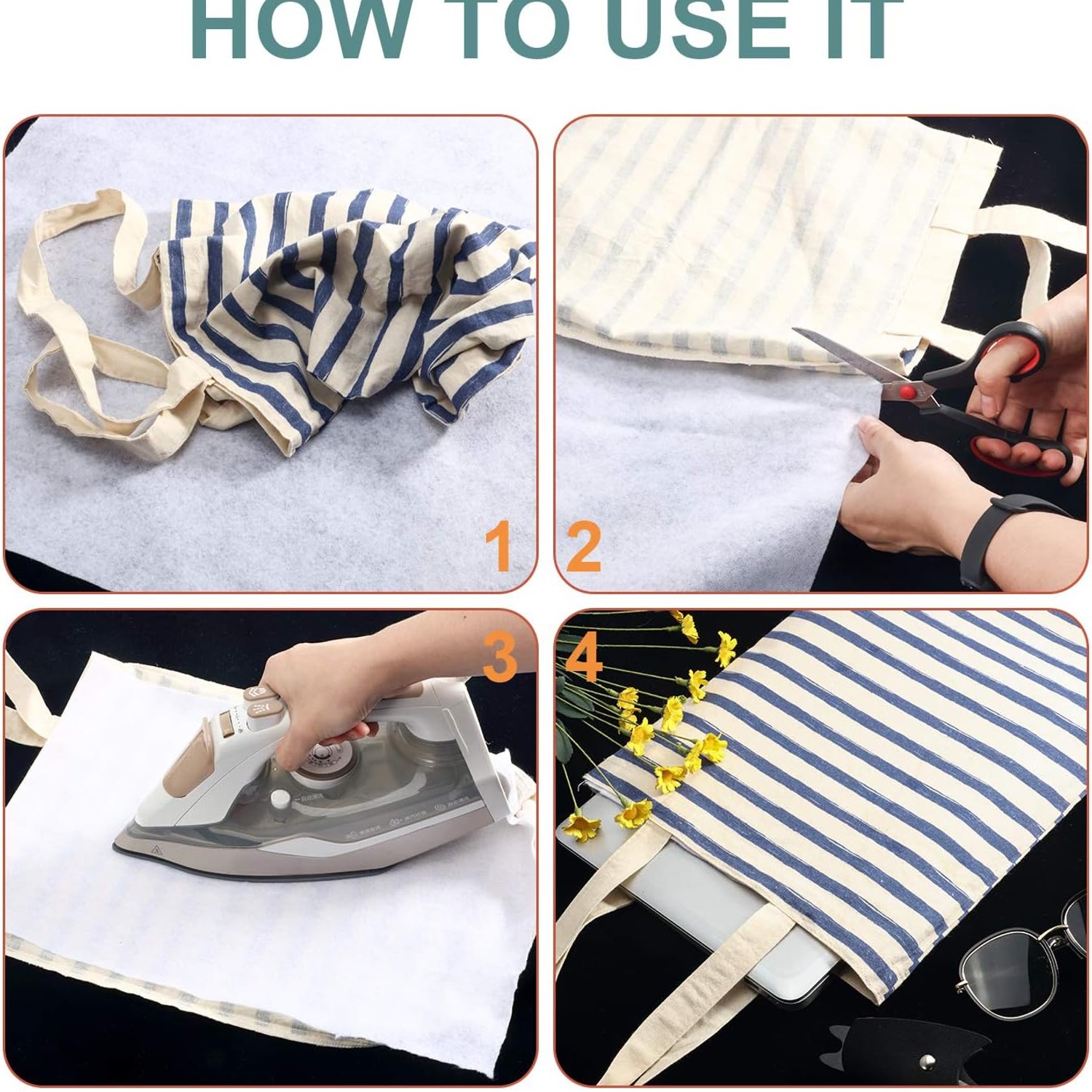
In general, the adhesive side is placed against the fabric you want to reinforce. Pressing activates the backing so the layers bond. Always follow the directions supplied with the product, including any advice about positioning and protecting the work.
The maker mentions an ironing time of 8 to 15 seconds, but it does not give an exact iron temperature. Your outer fabric also has its own heat limits. Do not assume a timing note means every fabric can tolerate the same pressing conditions.
Try a small sample first. That gives you a chance to see how the fabric reacts before committing a whole panel.
What is included in the pack
You receive two pre-sized pieces of white fusible fleece. Each is 51 cm wide and 274 cm long, with the stated imperial size of 20 x 108 in.
You are buying the two supplied pieces and cutting your own pattern shapes from them. That distinction matters if your shopping list calls for a single, wider sheet.
The narrow width is worth checking carefully. A long piece can still be too narrow for a broad panel. Lay out your pattern on a surface marked to the supplied width before ordering, especially if your project has large front or back sections.
Check the complete cutting layout rather than just one piece. Two panels might each fit on their own but need more usable length when placed with the other required parts.
Match the fleece to the pattern
Start with the interfacing instructions in your sewing pattern. If it calls for fusible fleece, compare the required dimensions with this pack. If it calls for a rigid support, foam or another named type of inner layer, do not treat those as interchangeable without further advice.
Fleece interfacing for bags can be useful where a pattern needs soft support. That does not establish whether this particular fleece will produce a bag that stands on its own. Thickness and firmness are not stated by the maker.
Think about how you want the finished item to behave. Should it fold easily? Does a panel need to hold a defined shape? Does a seam need only a little extra reinforcement? Those questions help you identify what to confirm before buying.
For a project with exact material requirements, missing details are a reason to ask questions, not to guess.
Check fabric compatibility before pressing
The product notes describe this fleece for light and medium-weight fabrics. Those terms offer a starting point, but they do not tell you everything about your fabric's response to heat.
Some fabrics need low pressing temperatures. Others may show marks or change appearance after heat is applied. Check the outer fabric's care instructions before choosing an iron-on method.
A useful test uses the same fabric you plan to sew, not a spare fabric with a different weave or finish. Cut a small sample and apply the fleece according to the supplied directions.
Let the sample cool before judging it. Look at the face of the fabric, feel the bonded section and check whether it has the amount of support you want. If the result is not right, pause before treating the larger pieces.
Understand the material information
The product notes describe polyester fusible fleece. However, a separate material field in the maker lists cotton. Those entries do not agree, so the exact composition needs confirmation if fibre content affects your choice.
A soft feel does not establish that a product contains cotton. Likewise, a general description should not be taken as proof of a precise fibre percentage when the available details conflict.
Thickness and weight per square metre are also not given. The listed weight of 331 g does not tell you the fleece's GSM, nor does it tell you how much loft it will add to a finished panel.
If you are replacing a familiar interfacing, check these details rather than expecting the same result from the product name alone. Two products described as fusible fleece may not meet the same pattern requirements.
Plan your cuts before using the fleece
Before reaching for the scissors, gather every pattern section that needs reinforcement. Check whether the pattern asks for full-size fleece pieces or a smaller shape that leaves the seam allowances clear.
Follow the pattern's cutting instructions rather than applying one rule to every project. The right layout depends on the construction and the support the designer expects.
Arrange the shapes within a 51 cm width, then check the length needed. Repeat the exercise for the second piece if your project uses both. This simple step helps reveal awkward layouts while the pack is still unused.
Keep any useful offcuts after cutting. They can provide test pieces for later sewing work, though their usefulness depends on their size. Store them with the application instructions so you do not have to rely on memory next time.
Sew a sample before the final seam
Bonding is only part of the job. The finished layers also need to work with your planned seams. Once your test panel has cooled, try a short line of stitching using the same fabric layers as the project.
Check how the seam feels and how easily it folds. If your project includes several layers at an intersection, test a similar arrangement rather than judging from a single flat piece.
The product is described as reinforcement around stitching, but no particular needle, stitch length or machine setting is specified. Use the guidance for your fabric and project, then adjust based on the sample.
This is especially helpful when using sewing project interfacing for an unfamiliar pattern. A small practice section is easier to change than a finished bag or garment.
Choose projects with clear requirements
Craft and sewing uses are listed for this product, including clothing. It may be worth considering for a project whose instructions call for a soft, single-sided adhesive fleece.
Be more cautious where the project has a safety role. The broad application notes do not establish electrical, heat-protection or other safety approval. They should not be used as a reason to modify an electric blanket or another safety-related item.
The same practical approach applies to gifts. A two-piece fleece pack may be useful to someone who already works with fusible materials, but their pattern may require a particular thickness or composition.
If you are buying for another sewer, ask what their project needs. Matching a known requirement is more helpful than choosing an inner layer based only on its name.
Care and storage need a little planning
The available care information identifies ironing, but does not provide washing or tumble-drying settings. Do not read application instructions as a complete care guide for a finished item.
If your project must be washable, confirm that the fleece and outer fabric can share a suitable care method before starting. This matters for clothing and items that will need frequent cleaning.
Keep unused fleece in a clean, dry place away from heat. Retain its packaging and any supplied instructions. These are useful both for later application and for checking what you bought.
Before cutting or testing any of the supplied fabric, consider whether you have enough information to keep it. Using a sample from the pack means it is no longer wholly uncut and unused.
Delivery, returns and the short version
No fixed delivery period is stated in the maker's description. Check the delivery information for your address before ordering, particularly if your sewing project has a deadline.
For UK change-of-mind returns, the period is 14 days from delivery. Fabric must be unwashed, uncut, unused and in its original packaging, and the customer pays return postage. Faulty or wrongly described goods are put right free of charge.
The short version is simple. This pack gives you two white pieces of single-sided, iron-on fleece, each 51 x 274 cm (20 x 108 in), for soft reinforcement of suitable light and medium-weight fabrics.
Check your pattern, confirm any material details that matter and plan the cutting layout first. If the dimensions and support requirements match, test the bonding method before moving on to your full project.