
The complete guide
A Practical Guide to Choosing Moss Green Polka Dot Fabric
Choosing fabric online is often harder than choosing the project itself. A colour catches your eye, then the practical questions follow. Will the print suit the design? Is there enough cloth? Will it behave the way your pattern needs?
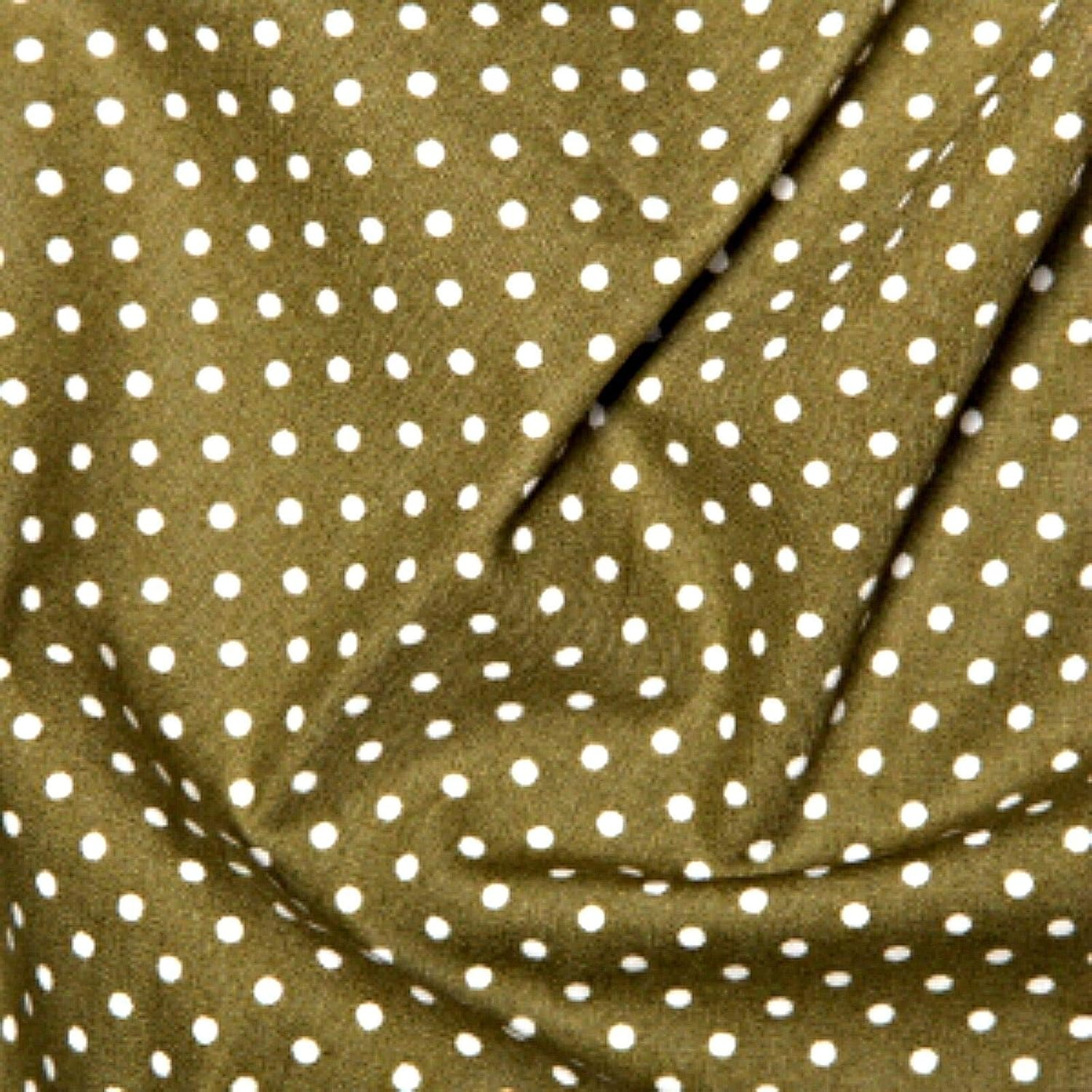
This polka dot fabric gives you a clear starting point. It is one piece of moss green cotton poplin, 1 metre long, with a 3 mm spotted pattern. It is described for clothing, quilting and craft applications. The main detail to resolve before buying is the width, which the maker does not state for this item.
Start with the project, not just the colour
A fabric can look right and still be wrong for a particular pattern. Before choosing green dressmaking fabric, read the suggested fabric types on your pattern envelope or instructions. Look at the required length and the width used to calculate it.
A metre is a length, not a promise that every small project will fit. A pattern with wide pieces may need more usable width than one with several narrow sections. Seam allowances, hems and any pattern placement also take space.
If you have not chosen a project yet, think about what you want to make before ordering. A planned use helps you judge whether this one-metre piece is enough, rather than leaving that decision until the scissors are out.
What this cotton poplin offers
The fabric is described as tightly woven cotton poplin with a soft, smooth handle and good drape. In plain terms, the description points to a woven fabric with a smooth feel that can fall into folds.
That makes it worth considering when a pattern calls for woven cotton. It does not establish that the fabric will suit every cotton garment. A project that needs a very firm cloth may have different needs from one designed around soft folds.
The maker does not state the fabric weight, thickness or stretch performance. Those gaps matter when a pattern depends on a particular structure. If weight is central to your choice, ask for more information rather than judging it from the photographs alone.
Getting the pattern scale right
The stated dot size is 3 mm. This is a small-scale spotted cotton fabric, so the print can add detail without using large motifs.
Think about how much of the print will remain visible in your finished item. Narrow bands, gathered sections and small patchwork pieces each show a pattern differently. The same cloth may look quite busy in one design and more restrained in another.
You can get a rough sense of scale by marking 3 mm on paper beside your pattern pieces. This will not reproduce the spacing or exact look of the fabric, but it can help you picture the size of each dot. Use the product images to assess the overall arrangement.
Choosing moss green with confidence
Colour is personal, especially when you are trying to match fabric you already own. Moss green gives this patterned cotton fabric its main colour, but a screen cannot guarantee an exact shade match.
Photography, room lighting and display settings can all affect what you see. Even two screens may show the same image differently. Keep that in mind if you need the fabric to match a zip, thread or another cloth closely.
Once it arrives, view it beside your other materials in natural light before doing anything permanent. Keep it unwashed, uncut and unused during that check if you may need to return it. A few minutes spent comparing colours can save a disappointing finish.
Why the missing width matters
The width is not stated by the maker for this item, so it should remain an open question in your planning.
A layout that fits across a wider cloth may need extra length on a narrower one. That is why a one metre fabric purchase cannot be assessed by length alone.
Ask for the width if your project has fixed requirements. For a design you have drawn yourself, arrange paper pattern pieces on a measured surface first. Once you know the available width, you can test the layout without cutting the fabric.
Do not assume that buying several items will provide one continuous piece. This product describes one piece measuring 1 metre long.
Using it for clothing
Clothing is one of the stated uses for this poplin sewing fabric. Start with a pattern that accepts woven cotton, then compare its needs with the details available here.
Length, width and fabric weight all affect the decision. So does the way you want the finished garment to sit. Good drape is part of the description, but there is no measured drape information or stated garment recommendation for a particular style.
Opacity is also not specified. Once the fabric arrives, hold it against the background or underlayer you expect to use. This can help you decide whether the finished design needs a lining or another adjustment.
Avoid treating it as a substitute for a stretch fabric. No stretch performance is stated, and patterns made for stretch materials may rely on that movement for fit.
Considering quilting and patchwork
Quilting is a stated application, making this a possible green quilting fabric for a planned colour scheme. The small dot pattern may be worth considering alongside plain fabrics or other prints.
Before cutting, work out the size and number of patches you need. Include seam allowances in every calculation.
There is also an unclear detail in the maker's description. A feature entry says quilted, but it does not explain any stitched layers or batting. Do not assume you are buying a ready-quilted panel. If that distinction affects your project, seek clarification first.
When choosing fabric for patchwork, consider how it will sit beside your other materials. A colour match is only part of the decision. The feel and care needs of the combined fabrics also deserve attention.
Planning crafts and handmade gifts
Cotton craft fabric can be useful for a wide range of sewing ideas, but each design has its own needs. A project that must hold its shape needs different planning from one meant to fold or gather.
Check the instructions for your chosen craft before deciding that this piece will work. If they call for a certain weight, finish or width, those requirements still apply even when the colour and print are appealing.
As fabric for handmade gifts, the moss green spot design offers a clear visual starting point. Choose the project around the recipient's needs, then calculate the fabric required. If you are giving the unsewn piece itself, let the recipient know it is one metre long and that the width is not stated.
When the fabric arrives, take time to inspect it while it is still intact. Check the colour, pattern and overall condition. Compare it with your order and your project plan.
Lay it out without cutting and consider where each pattern piece would go. This is also the time to decide whether you need more information about care or construction. Do not rely on guesswork when a missing detail could affect the result.
Keep the packaging until you know you are keeping the fabric. The return conditions require it to be unwashed, uncut, unused and in its original packaging. Inspection should come before prewashing or cutting, not after.
Care and preparation
Specific washing temperatures, drying settings and pressing instructions are not stated by the maker. Check any guidance supplied with the fabric before treating it.
Once you have decided to keep it, a small offcut can help you test washing and pressing before treating the whole piece. Check for colour transfer before pairing it with lighter fabrics. These checks are especially useful when several fabrics will share one finished item.
Do not assume a shrinkage rate. None is given. If your project depends on close measurements after washing, resolve the care question before making the final cuts.
Between sewing sessions, keep the fabric clean, dry and away from direct sunlight.
Delivery, returns and project deadlines
A delivery lead time is not stated by the maker. Check the delivery information when placing your order, particularly if you are sewing for a fixed date. Leave time to inspect the fabric and resolve questions before starting.
If it is not suitable, returns are available within 14 days of delivery under the stated condition requirements. The customer pays return postage. Faulty or wrongly described goods are put right free of charge.
The short version
This is one metre of moss green polka dot cotton poplin with 3 mm dots, described for clothing, quilting and crafts. Its tight weave, smooth handle and drape are useful starting details.
Then check the fabric while it is intact, plan your layout and cut only when you are confident it suits the job.