

The complete guide
A Practical Guide to Choosing Cream Satin Fabric
Finding fabric with the right finish is only part of planning a sewing project. You also need enough length, a usable width and care instructions that fit the finished piece. A lovely surface will not make up for a cutting layout that does not fit.
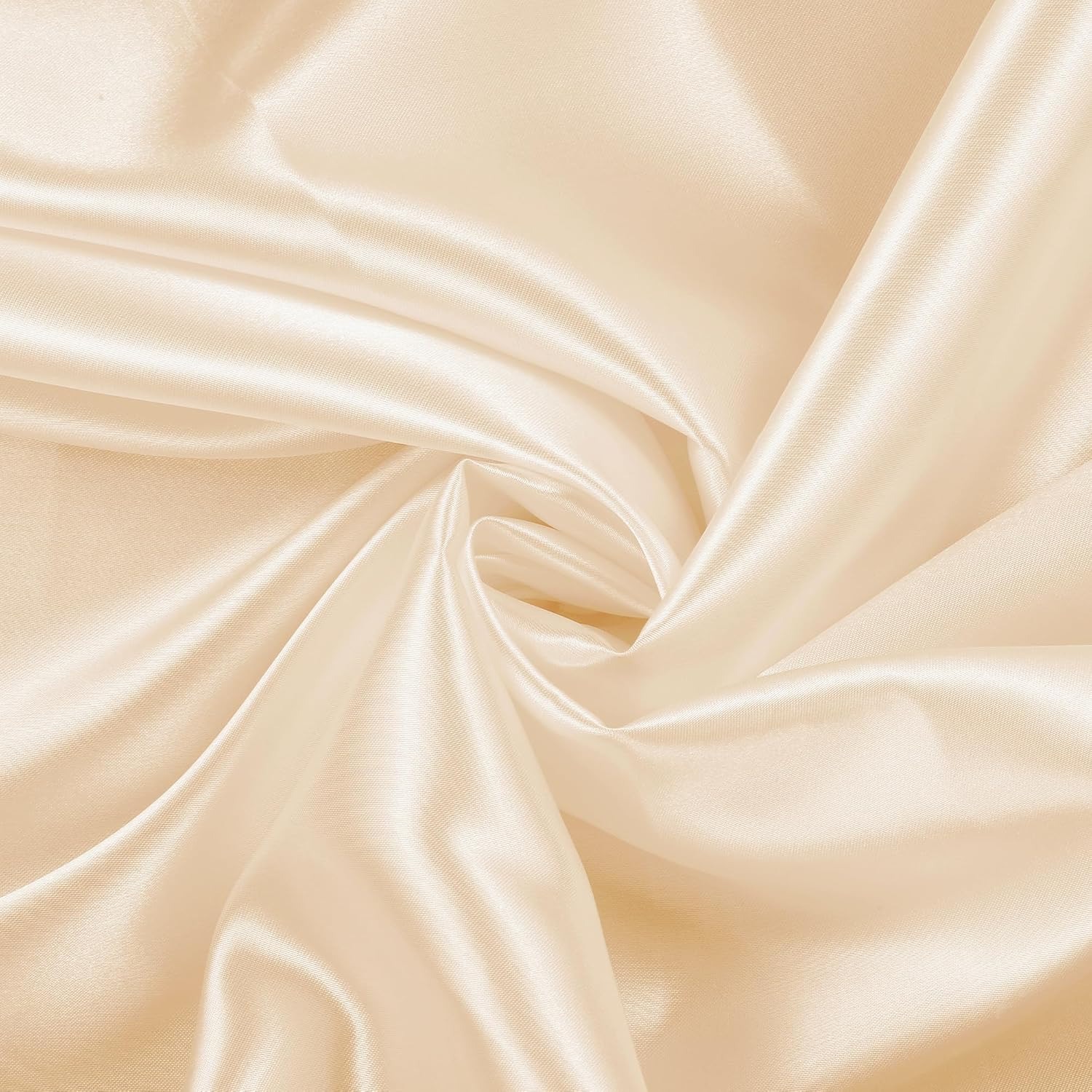
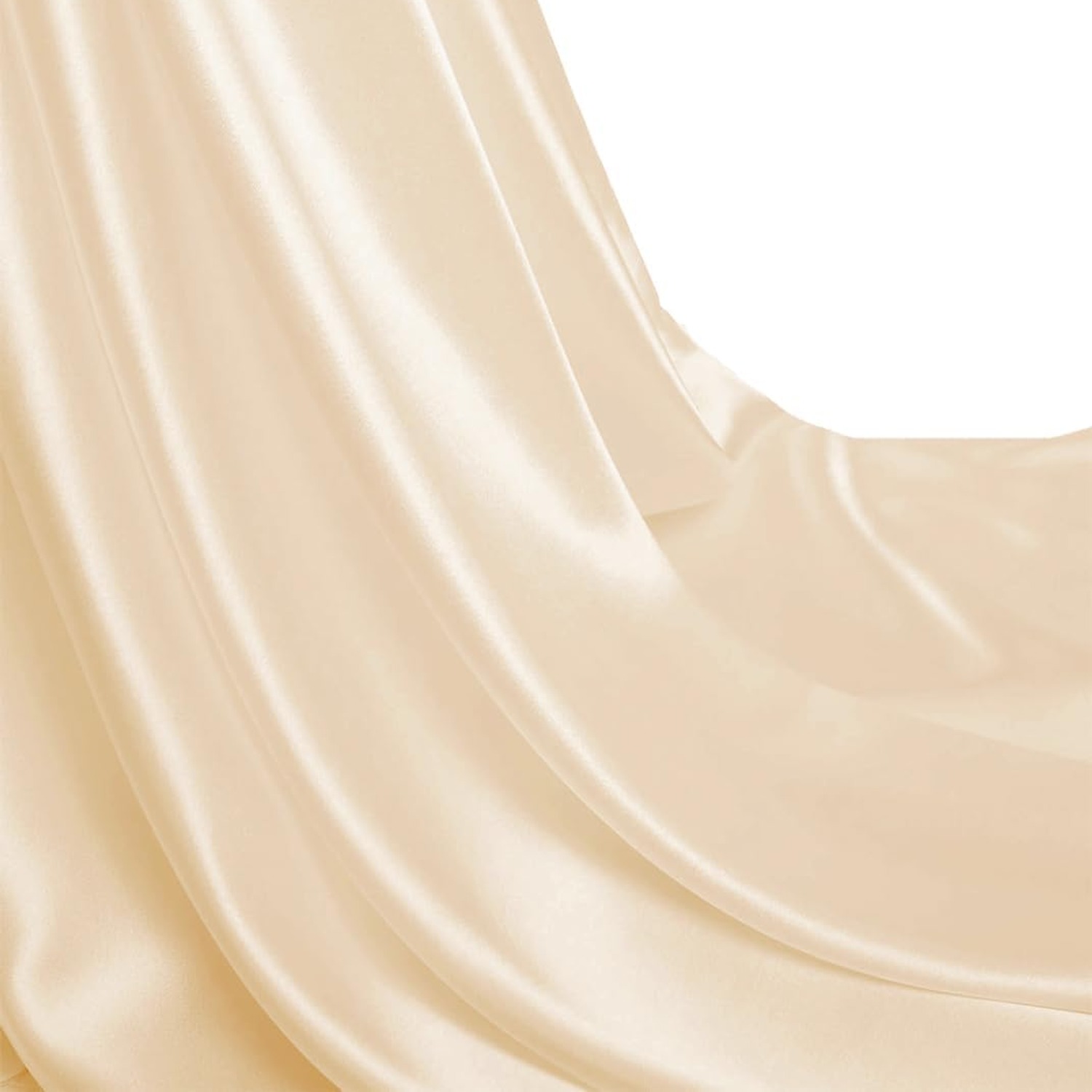
This cream satin fabric gives you one five-yard piece, measuring 4.57 m long and approximately 112 cm wide. It has a solid colour and a soft, lustrous finish. Those are useful starting points for dressmaking, bridal details and decorative sewing, but the right choice depends on what you want to make.
This guide helps you check the practical details before you commit your scissors.
What satin brings to a project
Satin is a weave, not a fibre name. It is associated with a smooth surface that reflects light, which can make folds and shaped details more noticeable. That is one reason satin appears in occasionwear and wedding sewing.
The stated fibre content here is 100% polyester. A silky finish does not mean silk, and choosing polyester satin fabric should be a deliberate decision based on your project and care needs.
Think about the effect you want. If the design relies on a softly reflective surface, satin may be worth considering. If you need a firm, matt fabric that holds a sharp shape without support, check the pattern recommendations carefully before choosing.
The maker does not state stretch, opacity or fabric weight per square metre. Those gaps matter more for some projects than others.
Start with the size, not just the colour
The supplied piece is five yards long and approximately 112 cm wide. Use those exact planning dimensions when checking your pattern.
The amount needed for a wide fabric may not work for a narrower one, even when the finished garment is the same size. Wide skirt panels, full sleeves and large decorative pieces can be especially sensitive to this.
Find the layout closest to the supplied width. Then check the allowance for your chosen size and any changes you plan to make. Added length, larger bows or extra ties all use fabric.
Do not assume that five yards will cover every dress pattern. A simple garment and a full skirt can have very different needs. If the layout is unclear, ask for advice before ordering rather than relying on a rough estimate.
Choosing cream for bridal and occasion sewing
Cream can be a useful starting point for a coordinated outfit or decorative detail. This fabric has a solid colour, so there is no printed motif to work around when planning the appearance.
Still, cream is not a precise colour match across different fabrics. A lace trim, lining or existing garment described as cream may look different beside it. Texture and sheen can also change how closely two materials seem to match.
For cream bridal fabric, make that comparison in the lighting where the finished piece will be worn or photographed. Daylight and indoor lighting can give different impressions.
Avoid cutting everything at once if colour matching is central to the project. Lay out the fabric with the other materials first. It is much easier to change a plan before work begins than after the main pieces have been cut.
Match the fabric to the pattern
Bridal and fashion sewing are listed applications, but that does not mean every pattern will suit this fabric. The pattern's own fabric guidance is your most useful starting point.
Look for requirements about drape, body, stretch and lining. If a design depends on stretch for fit, the missing stretch specification is a reason to pause. Do not treat a satin weave as proof of elastic recovery.
When considering satin fabric for dresses, think about coverage as well as shape. Opacity is not specified by the maker. Check a single layer against the intended underlayer and in good light before deciding whether to add a lining.
Structure needs a separate check. A bow that stands upright and a sash that falls loosely ask different things of a fabric. Make a small test rather than expecting one finish to behave the same way in every design.
Smaller projects deserve planning too
A full garment is not the only reason to choose five yard satin fabric. You might be planning sashes, bows or a group of matching decorative details.
Smaller pieces can make good use of a cutting layout, but their total fabric needs still add up. Work out the finished size, then allow for seams, folds and any joining method. Draw the pieces on paper if that helps you see how they will fit across the width.
For satin fabric for sashes, think about both sides of the finished item. Will it be folded and stitched, lined with another fabric or left as a single layer? The construction changes the amount required.
Keep a little space in your layout for test seams. An offcut can help you check stitching and pressing before you work on the visible parts.
Handling the fabric before cutting
Smooth fabrics can shift while you are arranging them. Give yourself a clear, flat surface and enough room to support the piece rather than letting most of it hang over the edge.
Lay it out without pulling it tight. Check that the fabric is resting evenly, then position the pattern pieces according to the pattern instructions. Take another look before cutting.
Use a marking method that you have tested on an offcut. Some marks can show on pale fabrics, and removing them may require treatment you would rather avoid.
Sharp cutting tools can help you work with control. Whether you prefer scissors or a rotary cutter, protect the surface beneath and keep the fabric supported. A careful layout is more useful than rushing to start sewing.
Test your seam before the main work
A short practice seam can answer several questions at once. It lets you see how the fabric feeds through your machine, whether the stitch looks even and how the seam lies when opened or folded.
A specific needle size and stitch setting are not given by the maker for this fabric. Choose a needle suitable for the material, then test it with your thread and machine. Change one setting at a time if the result needs work.
Look closely for puckering, skipped stitches or marks around the needle holes. There is no need to accept a poor sample seam and hope the main garment will turn out differently.
If you are new to satin sewing projects, start with a simple shape. Fewer seams and less fitting work give you more room to learn how the fabric handles.
Plan care before adding trims
The listed care method is warm machine washing with mild soap. Drying instructions allow hanging or a dryer air-dry setting.
That tells you about the fabric, but a finished item may contain several materials. Lace, interfacing, decorative trims and fastenings can each have their own care needs. Plan for the whole item rather than treating the main fabric's instructions as the only rule.
Test your intended wash method on an offcut before treating the full piece. Check the appearance and feel after it has dried.
An ironing temperature is not stated. If pressing is needed, begin with a low setting suitable for polyester and test a spare piece first. Do not apply an untested setting to a visible panel.
Inspect before you wash or cut
When the fabric arrives, give yourself time to inspect it. Check the colour, surface and size against your project needs while the piece is still unused.
This is also the moment to compare any coordinating fabrics and trims. Hold them together, look at them in different light and check whether you still like the combination.
The stated return window is 14 days from delivery. Change-of-mind returns require the fabric to be unwashed, uncut, unused and in its original packaging, with return postage paid by the customer.
That makes the order of your checks important. Decide whether the fabric is suitable before washing or cutting. If it is faulty or wrongly described, contact us, as those problems are put right free of charge.
Allow room in your project schedule
A sewing deadline needs more than a delivery date. You may also need time to inspect the fabric, test seams, prepare a lining and make fitting changes.
A confirmed arrival date is not given by the maker. Check the delivery information when ordering, and ask before buying if the fabric is needed for a fixed event.
For wedding sewing fabric in particular, leave time to resolve colour or pattern questions before starting. Working backwards from the event date can help you see whether the plan is realistic.
If you are buying as a gift, check the recipient's preferred fibre, colour and project size. Fabric is a thoughtful choice when it fits an actual sewing plan.
The short version
Choose this cream satin fabric for its solid colour, polyester composition and soft, lustrous finish. Plan around one piece measuring five yards, or 4.57 m, long and approximately 112 cm wide.
Before ordering, check your pattern's width allowance and fabric recommendations. Before cutting, inspect the colour and surface, confirm any lining needs and test your sewing method.
A little preparation helps you use the fabric well. It also gives you a clear chance to decide whether it is right for the project while the return conditions can still be met.